Decoding K-Drama Fan Theories in the U.S.: Top 3 Plots
Advertisements
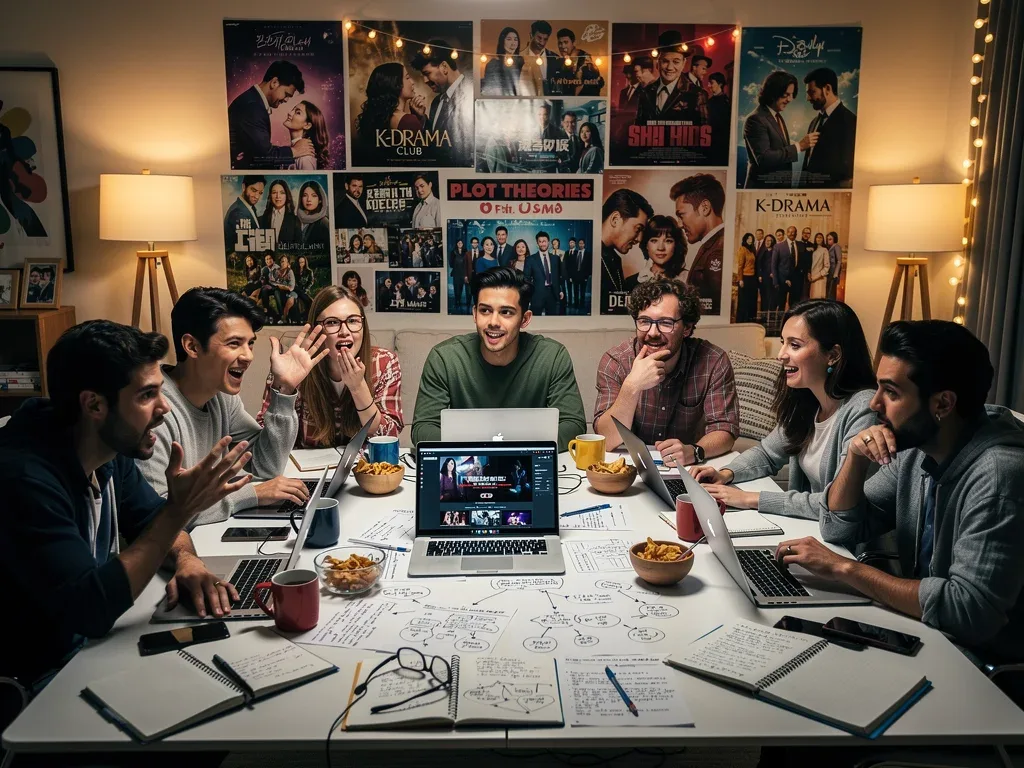
Decoding K-Drama Fan Theories in the U.S. requires separating documented audience discussion from claims that cannot be measured reliably. In the first half of 2026, Korean series continued to attract large global audiences, while English-language fan communities actively debated identities, symbolism, plot twists, and unresolved questions.
There is no authoritative dataset ranking a “top three” K-Drama fan theories specifically among U.S. viewers, so descriptions of a time-loop theory, a shared multiverse, or an unreliable narrator as the three most discussed plots should not be presented as established fact.
A stronger approach is to examine three recurring types of discussion visible around actual 2026 K-Dramas: fragmented identity in Can This Love Be Translated?, questions about constructed identity in The Art of Sarah, and possession and identity uncertainty in My Royal Nemesis.
What the Evidence Actually Supports About K-Drama Fandom in 2026
Korean entertainment continued to command substantial attention on global streaming platforms during the first half of 2026.
Netflix reported that non-English titles represented more than one-third of viewing during the period, with South Korean series including Teach You a Lesson, Can This Love Be Translated?, The Art of Sarah, My Royal Nemesis, and Bloodhounds Season 2 among notable Korean releases.
This broader K-Drama growth provides real context for active fandom, although global viewing figures should not be converted into an unsupported ranking of U.S.-specific fan theories.
Why a “Top Three Most Discussed Theories” Ranking Cannot Be Verified
Reddit threads, social posts, fan videos, Discord conversations, and comment sections provide evidence that viewers are actively discussing theories, but they do not form a complete statistical sample of K-Drama viewers in the United States.
Post counts, upvotes, comments, hashtags, and video views also measure different behaviors, making it difficult to combine them into a defensible national ranking.
Unless a platform publishes geographically filtered engagement data comparing specific theories, the safest description is that certain plot questions generated substantial discussion rather than declaring them the three most discussed theories in America.
Theory Pattern 1: Fragmented Identity in Can This Love Be Translated?
Can This Love Be Translated? premiered on Netflix on January 16, 2026 and quickly became one of the Korean titles generating substantial English-language online conversation.
Although the series begins around the relationship between interpreter Ju Ho-jin and actress Cha Mu-hee, viewers also spent considerable time debating Mu-hee's alter ego and how literally the drama intended audiences to interpret that element.
The discussion became especially active because the drama shifts tone as it progresses, encouraging viewers to reconsider whether they were watching a straightforward romance, a psychological story, a supernatural element, or a mixture of genres.
What Fans Were Actually Debating
Discussion threads show viewers disagreeing about the meaning of Do Ra-mi, the relationship between Mu-hee and that identity, and whether the storyline strengthened or weakened the drama.
Some viewers interpreted the alter ego primarily through trauma and psychology, while others treated the character as part of the show's heightened or potentially supernatural storytelling.
That documented disagreement is more defensible than describing the show as evidence of a hidden time loop, because the available discussions directly reference identity, memory, trauma, and the alter ego.
Whether Do Ra-mi should be interpreted literally, psychologically, or symbolically.
Whether the tonal shift was intentional genre blending or a narrative inconsistency.
How the alter-ego storyline changed the interpretation of Mu-hee's relationships and past.
Theory Pattern 2: Constructed Identity in The Art of Sarah
The Art of Sarah premiered on Netflix on February 13, 2026 and centers on a woman whose identity becomes increasingly difficult to define as a detective investigates her background.
The official premise itself encourages questions about names, professions, histories, and personas, making identity reconstruction an intentional part of the mystery rather than merely a fan-created interpretation.
English-language fan discussions repeatedly returned to the question of who Sarah really was and whether apparent inconsistencies were plot holes, deliberate ambiguity, or clues about the series' larger themes.
Why Viewers Kept Questioning What Was Real
Fans discussed the possibility that the drama's shifting identities were more important than discovering one definitive biographical truth about its protagonist.
Some viewers focused on unresolved details and wanted a conventional explanation, while others argued that uncertainty about Sarah's identity was central to the story's commentary on status, image, and reinvention.
This makes The Art of Sarah a documented example of theory-driven viewing in 2026 without requiring the unsupported claim that it was built around an unreliable narrator in the technical sense.
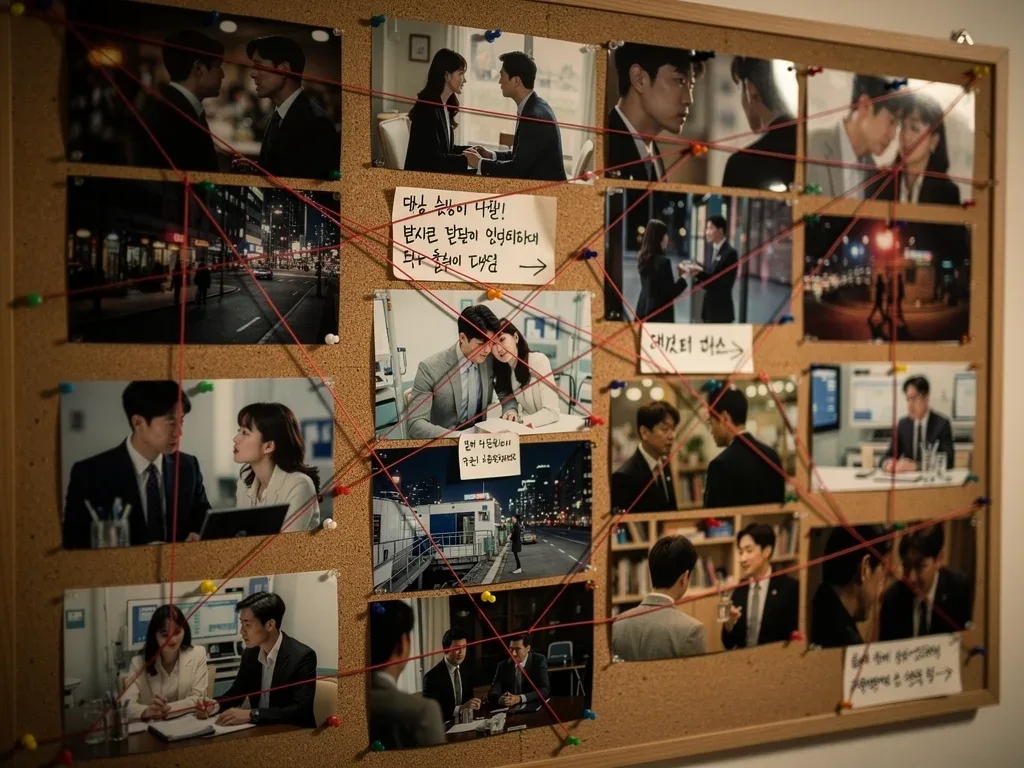
Theory Pattern 3: Possession and Identity in My Royal Nemesis
My Royal Nemesis premiered in May 2026 with a fantasy-romance premise involving a modern actress and the spirit of a notorious woman from the Joseon era.
Because the drama explicitly plays with possession, memory, personal identity, and the relationship between two apparent selves, viewers naturally questioned how literally its initial premise should be understood.
Episode discussions show that revelations about Shin Seo-ri and Kang Dan-sim led viewers to revisit earlier assumptions about which identity was controlling events and what the story had concealed.
Why It Generated Theory-Heavy Discussion
Fans speculated about the relationship between the modern and historical identities before later episodes clarified important elements of the premise.
The reveal structure encouraged audiences to compare earlier scenes with later information and reconsider whether the drama's apparent possession narrative had been telling the whole story.
That type of discussion is a better example of documented 2026 fan theorizing than an unsupported claim that two unrelated dramas were secretly preparing a crossover universe.
Why the Original Time-Loop Claim Should Be Removed
The original article described a currently airing 2026 K-Drama whose characters were supposedly trapped in a cyclical timeline, yet it did not identify the series.
Without a title, episode reference, creator statement, or documented fan discussion supporting the claim, details such as repeated camera angles, predictive dreams, and characters remembering prior loops cannot be independently verified.
Time travel and temporal loops are established K-Drama storytelling devices, but that does not justify presenting a fictional unnamed 2026 example as the year's dominant American fan theory.
Why the Alternate-Universe Claim Should Be Removed
The original text also claimed that fans believed two unnamed K-Dramas were secretly converging through shared companies, character names, products, and visual motifs.
No dramas were identified and no source was provided showing that the similarities existed or that production companies had intentionally planted crossover clues.
Shared fictional universes can be an entertaining fan concept, but without identifiable source material this specific story should be treated as hypothetical rather than reported as a 2026 fandom trend.
Why the Unreliable Narrator Claim Needs Reframing
The original third theory described an unnamed mystery-thriller whose central character allegedly presented false flashbacks and distorted memories.
An unreliable narrator is a recognizable storytelling technique, but proving that a particular drama uses it requires evidence from the actual series rather than generic references to trauma, visual distortion, or contradictory memories.
The Art of Sarah provides a better documented example of viewers questioning narrative truth, although its identity puzzle should not automatically be labeled an unreliable-narrator device.
The Role of Social Media in K-Drama Fan Theories
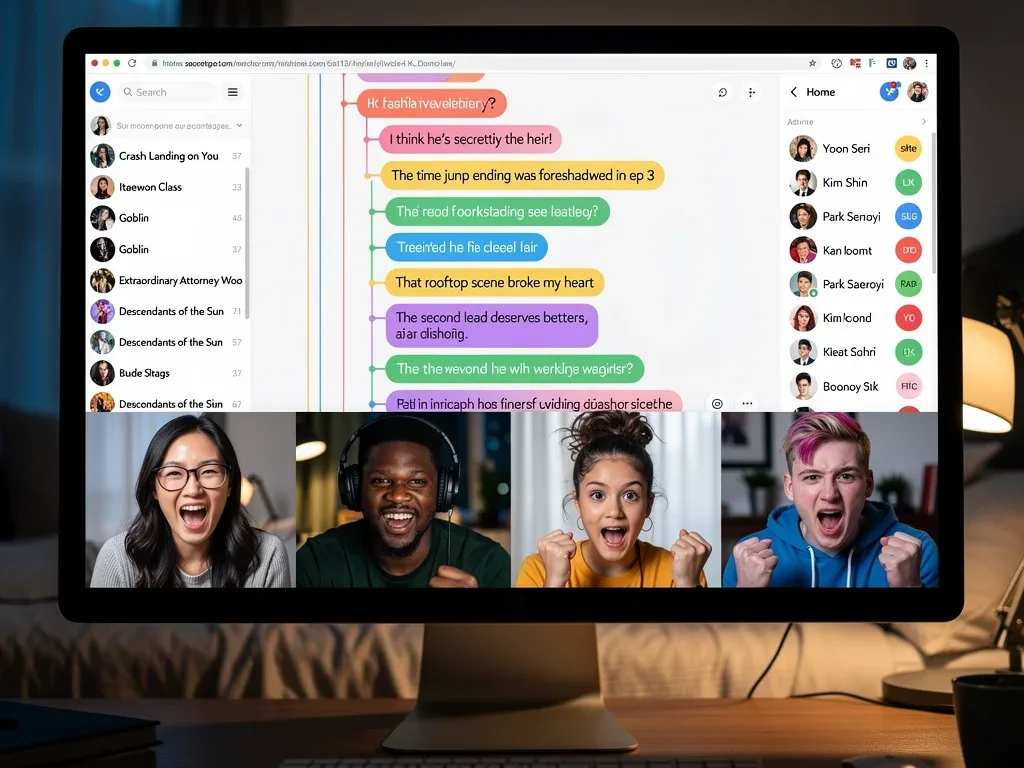
Online communities make theory-building visible because viewers can compare interpretations almost immediately after watching an episode or full-season release.
Reddit discussion threads often organize comments by episode and require spoiler tags, allowing audiences to document predictions before later revelations confirm or disprove them.
Other platforms can amplify screenshots, edits, translations, and short-form reactions, contributing to a wider K-Drama fan discussion ecosystem.
Reddit as a Source of Fan Reaction
The January 2026 r/KDRAMA discussion for Can This Love Be Translated? accumulated hundreds of votes and organized separate conversations around all 12 episodes.
The Art of Sarah received a similar episodic discussion structure in February, while My Royal Nemesis generated recurring threads as its episodes aired in May and June.
These discussions demonstrate active theory and interpretation culture, although Reddit users cannot automatically be treated as a representative sample of the entire U.S. audience.
The U.S. Audience Is Part of a Broader Global K-Content Boom
Netflix has reported that more than 80% of its global members have watched Korean titles, illustrating the scale of international interest in Korean entertainment.
A separate Netflix-commissioned study published in 2025 included respondents in the United States among more than 11,500 people surveyed across eight countries about the cultural impact of Korean content.
Those findings support the claim that U.S. audiences participate in global K-content fandom, but they do not provide a ranking of which 2026 plot theories American viewers discussed most frequently.
Fan Theories Can Change How Viewers Watch a Drama
Theory discussions encourage viewers to revisit earlier episodes, compare dialogue, examine visual clues, and reconsider scenes after later revelations.
This creates a more participatory form of viewing in which audiences debate interpretation instead of simply waiting for the next plot development.
However, strong fan engagement does not prove that every apparent clue was deliberately planted by the writers, because viewers can also create connections that were never intended by the production.
Rewatching Becomes Part of the Experience
Mystery, fantasy, and identity-driven dramas are particularly suited to rewatching because later information can change how an earlier scene is understood.
Discussion communities make this process collaborative by allowing one viewer to notice a detail that others overlooked.
The resulting theories can remain entertaining even when the final episodes eventually disprove them.
Streaming Data Provides a Better Measure of Reach
When measuring popularity, platform viewing data provides firmer evidence than attempting to infer national fandom from individual social posts.
Netflix reported 29 million views for Can This Love Be Translated?, 26 million for The Art of Sarah, and 16 million for My Royal Nemesis during the first half of 2026.
Those figures are global rather than U.S.-only measurements, but they demonstrate that the three dramas reached audiences large enough to support substantial online discussion.
Popularity Is Not the Same as Theory Volume
A highly watched series does not necessarily produce the greatest number of theories because genre and storytelling structure strongly influence how viewers engage with it.
A straightforward romance may generate more views while a smaller mystery series generates more speculation per viewer.
For that reason, streaming performance should be used to establish audience reach, not to claim automatically that one drama generated more theories than another.
What Readers Should Look for When Evaluating Fan Theories
A strong fan theory should identify the specific drama, episode, scene, dialogue, or production detail that supports the interpretation.
It should also distinguish between confirmed information, plausible interpretation, and speculation rather than presenting every connection as intentional foreshadowing.
Theories become easier to evaluate after a series finishes because viewers can compare early predictions with the complete narrative.
Looking Ahead at K-Drama Fan Culture
Current K-Drama streaming trends in 2026 suggest that Korean content will continue reaching substantial international audiences across romance, thriller, fantasy, action, and other genres.
As long as series use mysteries, hidden identities, nonlinear storytelling, possession, memory gaps, and ambiguous endings, fans will continue building theories around unresolved information.
What may change is the speed at which interpretations spread, as streaming releases and social platforms allow global audiences to discuss the same plot developments almost simultaneously.
Discussion Pattern | Documented 2026 Example |
|---|---|
Fragmented Identity | Can This Love Be Translated? generated discussion about Mu-hee, Do Ra-mi, trauma, and the nature of the alter ego. |
Constructed Identity | The Art of Sarah led viewers to debate Sarah's real identity, multiple personas, symbolism, and deliberate ambiguity. |
Possession and Identity | My Royal Nemesis encouraged speculation about the relationship between Shin Seo-ri and Kang Dan-sim. |
Online Engagement | Reddit episode threads, reviews, and fan communities documented ongoing debate as the dramas were released. |
Frequently Asked Questions About K-Drama Fan Theories
Were time loops the most discussed K-Drama theory in the U.S. in early 2026?
There is no reliable public dataset establishing that ranking. Time-loop stories are familiar in K-Dramas, but the original article did not identify a 2026 drama supporting the specific claim.
Which 2026 K-Dramas generated documented fan discussion?
Can This Love Be Translated?, The Art of Sarah, and My Royal Nemesis all generated substantial English-language online discussion around plot interpretation, characters, and narrative reveals.
Was there evidence of two 2026 K-Dramas secretly sharing a universe?
No verified example matching the original description was identified, so the alleged shared brands, names, and crossover clues should not be reported as fact.
Why was The Art of Sarah heavily theorized?
The drama intentionally centers on uncertain identities, multiple backgrounds, and questions about who Sarah Kim really is, giving viewers substantial room for interpretation.
Does Reddit represent all U.S. K-Drama fans?
No. Reddit is useful for documenting specific fan reactions and discussions, but its users are international and are not a statistically representative sample of the U.S. K-Drama audience.
Perspectives
The activity surrounding K-Drama theory discussions in 2026 reflects the broader international reach of Korean entertainment and the willingness of audiences to engage deeply with complex narratives.
Related cultural developments, including the international recognition explored in coverage of K-Dramas in France in 2026, show that this fandom extends well beyond one national market.
The strongest reporting on K-Drama Fan Theories US should therefore distinguish measurable audience reach, documented fan discussion, and imaginative speculation rather than turning entertaining theories into unsupported rankings or factual plot claims.