U.S. Drama Consumption vs. Global Trends: 2026 Insights
Advertisements
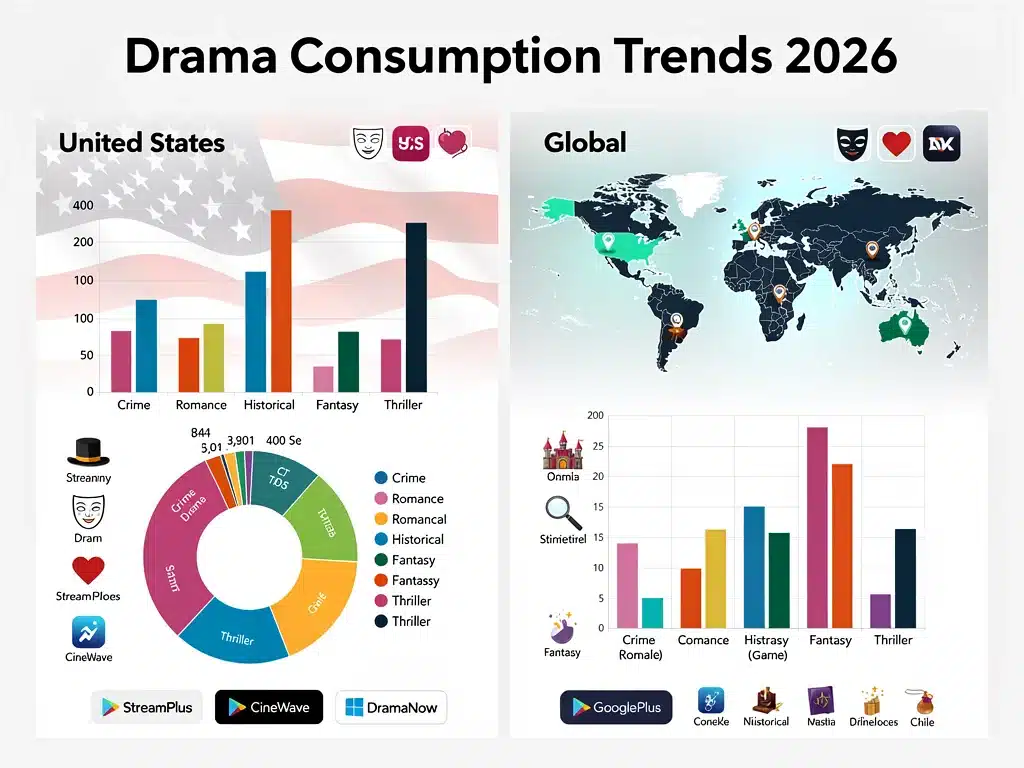
The 2026 data reveals that U.S. drama consumption diverges from global trends primarily in genre preference, episodic pacing, and the influence of localized content, showcasing distinct audience behaviors.
Have you ever wondered if your drama viewing habits align with the rest of the world? The landscape of entertainment is constantly evolving, and 2026 data offers fascinating insights into how different regions consume serialized storytelling. This article delves into a detailed analysis, highlighting how U.S. drama consumption stands apart from global trends, revealing three truly surprising differences that reshape our understanding of audience preferences and the future of television.
Advertisements
The Divergence in Genre Dominance: A U.S. Anomaly
When we look at the global drama landscape, a rich tapestry of genres captivates audiences, from the intricate narratives of East Asian historical dramas to the gritty realism of European crime series. However, 2026 data reveals that U.S. drama consumption exhibits a distinct preference for certain genres that do not always align with the global mainstream. This divergence is not merely a slight variation but a significant statistical shift, indicating deeply ingrained cultural and historical influences on American viewing habits.
Globally, romantic dramas and historical epics, particularly those originating from South Korea and Turkey, continue to command massive viewership, fueled by strong emotional storytelling and intricate character development. These genres often transcend language barriers, finding devoted fan bases across continents. In contrast, U.S. audiences, while certainly not immune to these global phenomena, show a more pronounced inclination towards specific domestic productions.
The Enduring Appeal of Procedural Dramas
One of the most striking differences lies in the sustained popularity of procedural dramas within the U.S. While many international markets have seen a gradual shift towards more serialized, character-driven narratives, American viewers continue to flock to shows featuring weekly, self-contained cases. This includes police procedurals, medical dramas, and legal thrillers, which offer a sense of resolution and predictability that resonates deeply with a segment of the audience.
- Predictable Structure: Each episode typically provides a complete story arc, offering a satisfying conclusion without requiring extensive prior knowledge.
- Comfort and Familiarity: Long-running franchises provide a sense of comfort and familiarity, acting as reliable entertainment staples.
- Broad Appeal: These genres often avoid niche topics, appealing to a wider demographic seeking accessible storytelling.
- Episodic Nature: Perfect for casual viewing, allowing viewers to drop in and out without missing crucial plot points.
This preference for procedural narratives highlights a cultural inclination towards problem-solving and immediate gratification in storytelling. While global audiences appreciate complex, unfolding sagas, American viewers often enjoy the self-contained challenge and resolution offered by these structured dramas. This isn’t to say Americans don’t enjoy complex narratives, but the sheer volume of consumption for procedurals remains a significant outlier.
Another area of genre divergence is the strong emphasis on ensemble casts and character-driven narratives within U.S. dramas, particularly in family sagas and workplace dramas. These shows often prioritize character development and interpersonal relationships over grand, sweeping plots, allowing viewers to form deep connections with fictional individuals. This contrasts with global trends where plot intricacy and high-concept premises often take precedence. The 2026 data clearly illustrates that while international viewers are drawn to the spectacle and emotional intensity of global dramas, American audiences often seek a more grounded, relatable experience, even within fictionalized settings.
Pacing and Consumption Habits: A Binge-Watching Battleground
The speed at which audiences consume drama content has become a critical metric in understanding viewing habits, and 2026 data reveals a fascinating distinction between U.S. and global patterns. While binge-watching has become a global phenomenon, the intensity and preferred pacing of consumption vary significantly, positioning the U.S. as a unique battleground for episodic delivery.
Globally, while streaming services have normalized dropping entire seasons at once, many international audiences, particularly in Asia and parts of Europe, still exhibit a stronger preference for weekly releases. This allows for communal viewing experiences, prolonged discussion, and a more gradual engagement with the narrative. The anticipation built between episodes often forms a significant part of the viewing pleasure, fostering online communities and driving social media conversations over extended periods.
The American Binge-Watching Imperative
In the U.S., however, the data for 2026 strongly indicates an even deeper entrenchment of binge-watching culture. American audiences are not just open to binge-watching; they actively expect and often demand it. The concept of patiently waiting a week for the next installment of a compelling drama is increasingly seen as an outdated model, especially for new series launches on major streaming platforms.
- Instant Gratification: The desire to consume an entire story arc without interruption is a primary driver.
- Catch-Up Culture: Binge-watching allows viewers to quickly catch up on popular shows and join ongoing conversations.
- Flexible Scheduling: Viewers can watch at their own pace, fitting drama consumption into busy modern lifestyles.
- Narrative Immersion: Uninterrupted viewing can lead to deeper immersion in complex storylines and character arcs.
This accelerated consumption pattern in the U.S. has profound implications for content creators and distributors. It necessitates front-loading production budgets, as the entire season needs to be ready for simultaneous release. Furthermore, it shifts marketing strategies from sustained weekly campaigns to intense, short-burst promotions designed to capture immediate attention and drive full-season engagement.
Conversely, the global trend, while embracing some aspects of binge-watching, still shows a stronger inclination towards hybrid models or even traditional weekly releases, especially for highly anticipated international co-productions. This allows for a more measured approach to storytelling, giving narratives room to breathe and audiences time to process complex themes. The U.S. audience’s near-unanimous embrace of binge-watching for new drama series establishes a clear and surprising difference in consumption philosophy, impacting everything from narrative structure to content monetization.

The Influence of Localized Content and Cultural Resonance
Perhaps one of the most intriguing differences in 2026 drama consumption data lies in the varying degrees to which localized content and cultural resonance impact viewership in the U.S. versus globally. While international markets increasingly embrace a diverse array of foreign-language dramas, American audiences still demonstrate a strong, though evolving, preference for English-language productions, often with a distinct cultural flavor.
Across the globe, the appetite for non-English language dramas has exploded. K-dramas, J-dramas, C-dramas, Turkish series, and European productions have successfully crossed borders, building massive international fan bases. This global phenomenon is driven by high-quality storytelling, unique cultural perspectives, and the growing accessibility of subtitled and dubbed content. Viewers are actively seeking out narratives that offer fresh perspectives and challenge their existing cultural frameworks.
Subtitled vs. Dubbed: The American Divide
In the U.S., however, the data shows a more nuanced picture. While there is a growing appreciation for international dramas, particularly those that achieve breakout success through word-of-mouth or critical acclaim, the barrier to entry for non-English content remains higher than in many other regions. This is largely attributed to the preference for dubbed content over subtitled viewing, a trend that significantly impacts the reach of international dramas.
- Dubbing Preference: A significant portion of U.S. viewers prefer dubbed versions, allowing for passive viewing without constant reading.
- Cultural Familiarity: Audiences often gravitate towards narratives that reflect their own cultural norms, humor, and social dynamics.
- Marketing Challenges: Non-English dramas require more substantial marketing efforts to break through the domestic content saturation.
- Accessibility: While improving, the availability of high-quality dubbing for all international dramas is still inconsistent.
This preference for dubbed content, while making foreign dramas more accessible to some, can also alter the original artistic intent and voice of a production. Many global viewers, in contrast, actively seek out subtitled versions to experience the authentic performances and linguistic nuances of the original work. This cultural comfort with subtitles is a key differentiator in global consumption patterns.
Furthermore, the U.S. market, being a massive producer of its own drama content, often experiences a form of ‘domestic content saturation.’ American networks and streaming platforms release a vast quantity of original English-language dramas, which naturally captures a significant share of audience attention. While global platforms actively promote international content, the sheer volume and cultural proximity of domestic productions often keep U.S. viewers within their comfort zone. This creates a surprising difference where global audiences are actively diversifying their drama palate with foreign productions, while a substantial segment of the U.S. audience maintains a stronger focus on home-grown narratives, even those that explore universal themes.
The Role of Streaming Platforms in Shaping Preferences
The rise of streaming platforms has undeniably reshaped how drama is consumed worldwide, yet 2026 data indicates these platforms play a subtly different role in shaping preferences in the U.S. compared to global markets. While they offer universal access, their curation strategies and regional content licensing often lead to distinct viewing ecosystems.
Globally, streaming services like Netflix, Amazon Prime Video, and Disney+ have become conduits for cultural exchange, introducing audiences to dramas from diverse origins. Their aggressive investment in local-language productions has also blurred traditional content boundaries, making a Korean drama as accessible in Brazil as it is in Korea. This has fostered a globalized taste, where quality storytelling, regardless of origin, finds an audience.
U.S. Platform Strategy and Content Niche
In the U.S., while these same platforms operate, their strategy often leans towards consolidating market share with a strong emphasis on exclusive, high-budget American productions and licensed content that resonates with domestic tastes. The fierce competition among U.S.-centric streamers has led to a proliferation of niche platforms, each vying for a specific segment of the audience.
- Exclusive Content Wars: Major U.S. streamers heavily invest in proprietary series to attract and retain subscribers.
- Genre-Specific Platforms: The emergence of platforms dedicated to specific genres (e.g., crime, romance) caters to specialized U.S. tastes.
- Legacy Media Influence: Traditional U.S. broadcasters have successfully launched their own streaming arms, leveraging existing brand loyalty.
- Localized Curation: Algorithms are heavily tuned to suggest content based on individual U.S. viewer history and regional popularity.
This fragmentation means that while a U.S. viewer might have access to a vast library, their viewing habits are often guided by the curated offerings of their chosen platforms, which frequently prioritize U.S.-centric content. Globally, platforms often act as discovery engines for international content, whereas in the U.S., they can sometimes reinforce existing domestic preferences by heavily promoting American-made dramas.
The impact of this localized platform strategy is significant. It means that even with global access, the default viewing experience for many U.S. consumers remains heavily influenced by domestic productions. While an international subscriber might routinely encounter and engage with a Turkish or Spanish drama suggested by their platform, a U.S. subscriber is more likely to be directed towards the latest American limited series or a popular procedural. This subtle algorithmic bias, coupled with marketing spend, creates a distinct content consumption funnel that differentiates U.S. viewing from the broader global trends.
Economic Factors and Production Budgets
Economic factors and the sheer scale of production budgets represent another surprising area where U.S. drama consumption trends diverge from global patterns in 2026. The financial muscle behind American productions allows for a level of spectacle and star power that, while globally admired, also shapes domestic expectations and consumption habits in unique ways.
Globally, many drama industries operate with more constrained budgets, leading to innovative storytelling techniques, a focus on strong character development, and often shorter, more concise series. Countries like South Korea, Spain, and the Nordic nations have become masters of producing high-quality, compelling dramas that achieve international acclaim despite not always matching the per-episode budgets of their U.S. counterparts. Their success often lies in cultural specificity and universal emotional themes.
The Blockbuster Approach to U.S. Drama
In the U.S., 2026 data confirms a continuing trend of escalating production budgets, particularly for flagship drama series on major streaming platforms and premium cable networks. This ‘blockbuster’ approach to television drama allows for elaborate set pieces, extensive location shooting, and the casting of A-list Hollywood talent, creating a distinct viewing experience.
- High Production Value: Audiences expect cinematic quality, intricate visual effects, and grand scale.
- Star Power: The presence of well-known actors often drives initial viewership and marketing campaigns.
- Extensive Marketing: Large budgets extend to massive marketing campaigns, ensuring high visibility for new releases.
- Longer Seasons: The investment often justifies longer season orders, providing more content for binge-watching.
This financial disparity means that U.S. audiences are accustomed to a certain level of production gloss and scale that isn’t always feasible for international productions. While global viewers appreciate well-crafted stories regardless of budget, American viewers, having grown up with Hollywood’s production standards, often have higher expectations for visual grandeur and technical perfection in their drama series. This can sometimes create a subconscious bias, where lower-budget international dramas, despite their narrative brilliance, might struggle to capture the same initial attention in the U.S. market.
The economic model also influences content strategy. U.S. studios can afford to take bigger risks on high-concept, expensive dramas, betting on their ability to attract a massive domestic and international audience. This contrasts with many global producers who often need to secure international co-production deals or pre-sales to finance their projects, leading to content that might be designed with broader international appeal from the outset. Thus, the economic foundation of U.S. drama production fosters a unique consumption environment, where scale and star power often play a more decisive role in audience engagement compared to many other parts of the world.
Future Outlook: Converging or Further Diverging?
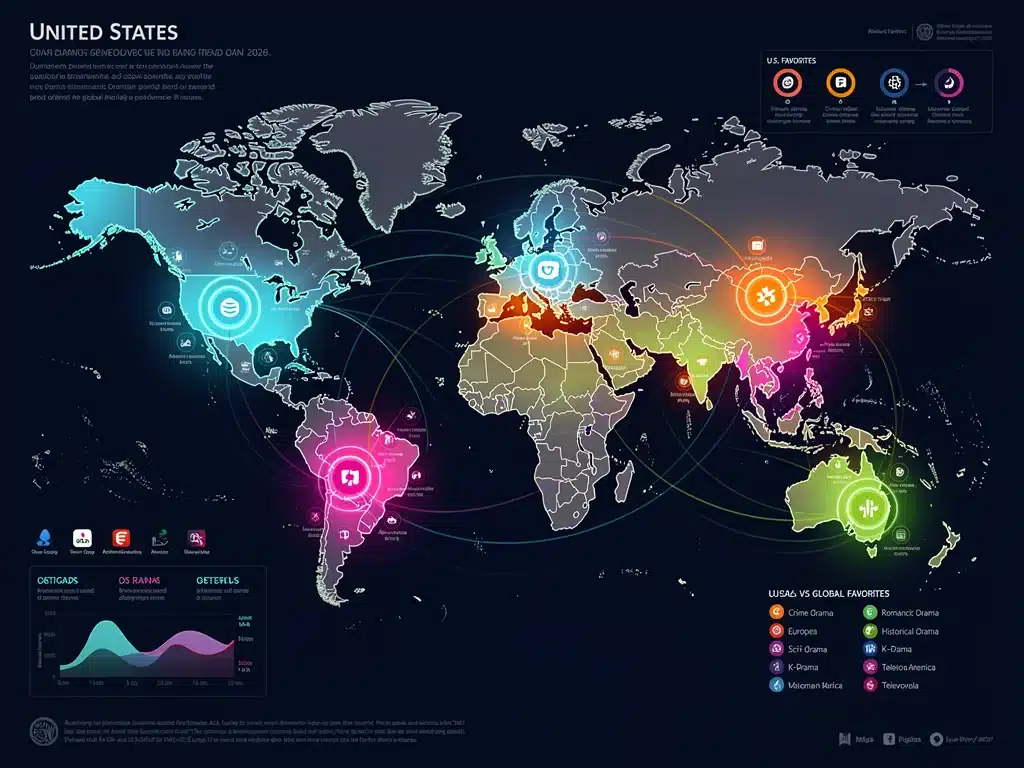
As we look beyond 2026, the question arises whether these surprising differences in U.S. drama consumption will persist, converge with global trends, or perhaps even diverge further. The dynamic nature of the entertainment industry, coupled with technological advancements and evolving audience behaviors, suggests a complex future where multiple forces are at play.
One perspective suggests that globalization, driven by streaming platforms, will inevitably lead to a greater homogenization of drama tastes. As more international content becomes readily available and culturally relevant, U.S. audiences might gradually shed their preferences for dubbed content and embrace a wider array of foreign-language productions. This convergence would see American viewers becoming more aligned with global audiences in their appreciation for diverse storytelling, regardless of origin or language.
Factors Influencing Future Trends
However, another viewpoint argues that the established differences are deeply rooted in cultural identity and market dynamics, making significant convergence a slow and arduous process. The sheer volume of U.S. domestic production, combined with the entrenched habits of binge-watching and genre preferences, could maintain a distinct trajectory for American drama consumption.
- AI-Powered Dubbing: Advanced AI could produce more natural-sounding dubs, potentially lowering the barrier for foreign content.
- Cultural Exchange: Increased cultural exchange through travel and social media could broaden genre appeal in the U.S.
- Niche Market Growth: The growth of niche streaming services could further segment audiences, reinforcing specific preferences.
- Technological Innovations: Interactive storytelling and personalized content delivery could create entirely new consumption patterns.
The future likely lies in a hybrid model, where certain aspects of U.S. consumption might align more closely with global trends, while others remain uniquely American. For instance, the appreciation for high-quality international dramas is undoubtedly growing in the U.S., but the preference for dubbed content or the intensity of binge-watching might prove more resistant to change. The market will continue to be influenced by both the desire for universal narratives and the comfort of culturally specific storytelling.
Ultimately, the trajectory of U.S. drama consumption relative to global trends will depend on a multitude of factors, including the strategic decisions of streaming platforms, the creativity of content creators, and the evolving tastes of a new generation of viewers. What is clear from the 2026 data is that the U.S. audience remains a fascinating and distinct entity within the global drama landscape, offering unique challenges and opportunities for content producers worldwide. The interplay between local appeal and global reach will continue to define the future of drama.
Implications for Content Creators and Marketers
Understanding these surprising differences in U.S. drama consumption compared to global trends in 2026 has significant implications for content creators, producers, and marketers alike. Tailoring strategies to these distinct habits is crucial for achieving success in a highly competitive global entertainment market.
For content creators targeting the U.S. market, the emphasis on procedural formats and character-driven ensemble dramas suggests a need to refine storytelling that offers both episodic resolution and compelling interpersonal dynamics. While experimental narratives are always welcomed, a solid foundation in these preferred genres can provide a more reliable path to audience engagement. Understanding the American imperative for binge-watching also means structuring narratives that can sustain continuous viewing, often with cliffhangers between episodes rather than between seasons.
Strategic Adjustments for Market Success
Marketers, in particular, must recognize the nuances of promoting drama in the U.S. versus internationally. For domestic releases, heavy upfront marketing is essential to capitalize on the binge-watching phenomenon, driving immediate viewership upon release. For international dramas entering the U.S. market, a strategic approach to dubbing quality and targeted cultural messaging becomes paramount to overcome the language barrier and resonate with local tastes.
- Tailored Storytelling: Craft narratives that align with U.S. genre preferences and pacing expectations.
- Localized Promotion: Adapt marketing campaigns to highlight elements that appeal specifically to American audiences.
- Dubbing Investment: Prioritize high-quality dubbing for non-English content to enhance accessibility in the U.S.
- Platform-Specific Content: Develop content strategies that align with the specific curation and audience of U.S.-centric streaming platforms.
Furthermore, the data suggests that while global platforms are pushing for diverse content discovery, U.S. content consumption remains somewhat insulated by domestic production volume and existing platform algorithms. This means that international content looking to break into the U.S. market cannot simply rely on being available; it needs a robust, localized strategy to cut through the noise and capture attention. This could involve partnerships with U.S. talent, culturally sensitive adaptations, or even creating U.S.-specific spin-offs of popular international formats.
The economic realities of U.S. drama production also mean that international creators might need to seek co-production opportunities or develop narratives that are compelling enough to attract significant investment, allowing them to compete on a similar visual and talent scale. Conversely, U.S. creators looking to succeed globally should consider narratives that transcend cultural specificities and embrace universal themes, while also being mindful of different consumption paces and platform strategies in various international markets. The 2026 data serves as a clear roadmap, indicating that a one-size-fits-all approach to drama content and marketing is increasingly ineffective in a world of distinct viewing preferences.
| Key Difference | Impact on U.S. Consumption |
|---|---|
| Genre Dominance | Strong preference for procedural dramas and character-driven ensemble casts over global romantic/historical epics. |
| Pacing & Habits | Deeply entrenched binge-watching culture, expecting full season drops, contrasting with global weekly release preference. |
| Localized Content | Higher barrier for non-English content, strong preference for dubbed over subtitled, domestic content saturation. |
| Economic Influence | Higher production budgets and star power shape U.S. expectations for visual grandeur and scale. |
Frequently Asked Questions About Drama Consumption
U.S. audiences show a significant preference for procedural dramas and character-driven ensemble casts. Globally, romantic dramas and historical epics, especially from East Asia and Turkey, dominate viewership. This highlights a distinct cultural inclination in American storytelling preferences.
The U.S. is deeply entrenched in binge-watching culture, with audiences often expecting full season drops. Many global markets, however, still prefer weekly releases, fostering sustained engagement and communal viewing, a more gradual approach to narrative consumption.
U.S. audiences generally have a higher barrier to entry for non-English content, preferring dubbed versions over subtitles. This contrasts with global trends where viewers actively embrace subtitled international dramas, impacting the reach of foreign productions in the American market.
Yes, higher production budgets in the U.S. lead to expectations for cinematic quality and star power. This ‘blockbuster’ approach to drama can sometimes make lower-budget international productions, despite their quality, struggle to capture the same initial attention domestically.
The future likely holds a hybrid model. While some U.S. preferences might align more with global tastes due to streaming, deeply rooted habits like binge-watching and genre preferences may persist, maintaining a distinct American trajectory in drama consumption.
Conclusion
The 2026 data on drama consumption paints a clear picture: while the world of serialized storytelling is increasingly interconnected, the U.S. audience retains a unique identity. The surprising differences in genre preference, consumption pacing, and the influence of localized content highlight a distinct cultural landscape that shapes how Americans engage with drama. For anyone involved in the creation, distribution, or marketing of dramatic content, understanding these nuances is not just insightful but essential for strategic success in an ever-evolving global entertainment ecosystem. The interplay between local appeal and global reach will continue to define the fascinating trajectory of drama consumption for years to come.
