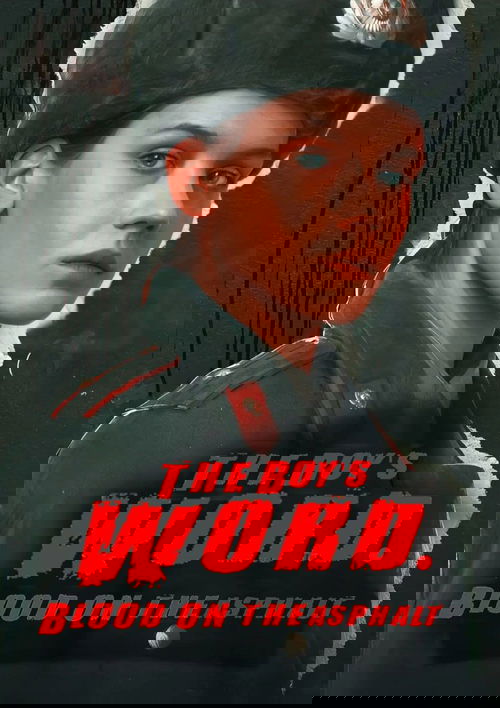
The Boy’s Word: Blood on the Asphalt
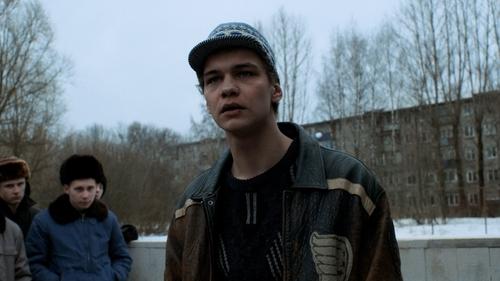
In the late 1980s, when “perestroika” was taking place in the USSR and the era of the Soviet Union was about to collapse, life became unstable and very different. The 1980s brought not only freedom, but also waves of crime on the city streets. While some young people began to ‘grow up’ on the streets, others found it difficult to find their place in this unpredictable reality. Andrey, lives with his mother and five-year-old sister. He studies at a music school and often encounters street teenagers who harass him. To protect himself, Andrey makes friends with one of these teenagers, Marat, who introduces him to gang life. Youth groups fight for every piece of territory; they defend their right to live the life, even breaking laws and promises. The only thing that matters to them is the vows they make to their gang members-brothers, with whom they confront the violence and fears of the adult world.
Episodes

Episode 1
A step outside. Quiet 14-year-old Andrei meets kids who are far from his circle. With them behind him, no school…
Episode 2
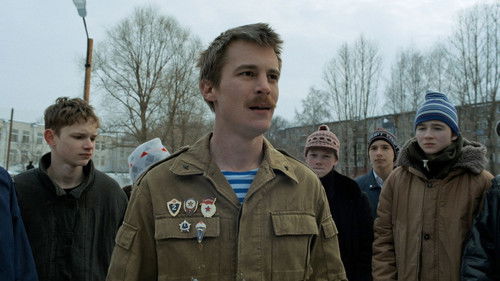
A completely different disco. Marat's brother returns from military service. The world has changed, and Vova's plans extend far beyond…

Episode 3
One fist is a threat, but ten is trouble. Someone has to answer for the fate of one of the…

Episode 4
Just like in the movies. Marat and his friends rescue Vova from the hospital and buy themselves some time to…

Episode 5
Honest business. Andrei's new idea attracts the attention of the streets, which see everything. But even under their strict supervision,…

Episode 6
The streets are unforgiving. Vova, Marat, and Zima conceal the details of their meeting with the Dombytovs, as the consequences…
Episode 7
Andrei is looking for ways to protect his family. Punishment is already hot on Vova's heels, but there is still…
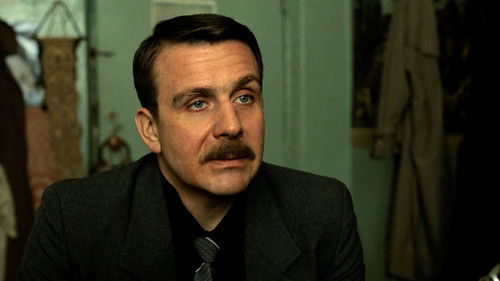
Episode 8
Some gave up, some gave in. To move forward, you have to leave the streets behind. But once you give…









THEDORAMA.COM Review
"The Boy's Word: Blood on the Asphalt" arrives not as a mere crime drama, but as a visceral excavation of a society in flux, a stark reminder that history often repeats its most brutal lessons. This 2023 series, set against the crumbling edifice of late 1980s Soviet Union, doesn’t just show us violence; it forces us to confront its seductive, destructive pull on a generation adrift.
Director Zhora Kryzhovnikov orchestrates a symphony of stark realism, eschewing glamorization for a grim authenticity that permeates every frame. The cinematography, often bathed in a desaturated palette, mirrors the bleak prospects of these young men, lending a suffocating weight to their territorial skirmishes. It’s a masterful choice, ensuring the visual language speaks volumes about their internal desolation. The narrative arc, tracing Andrey’s reluctant descent into gang life, is a classic coming-of-age perverted by circumstance. Leon Kemstach, as Andrey, delivers a performance of remarkable subtlety, his initial vulnerability slowly hardening into a chilling pragmatism. His journey, alongside Ruzil Minekaev’s Marat, is a testament to the screenplay’s ability to craft complex characters caught in an impossible moral quagmire. These aren't just thugs; they are products of a system failing them.
However, the series occasionally falters in its pacing. While the episodic structure allows for detailed character development, there are moments, particularly in the middle episodes, where the narrative feels a touch repetitive, dwelling a little too long on certain cycles of violence without propelling the story forward with the same urgency as its initial promise. Some supporting characters, despite strong performances from the likes of Anastasiya Krasovskaya, occasionally feel underdeveloped, serving more as narrative devices than fully realized individuals. Yet, this is a minor quibble in a series that largely succeeds in its ambitious scope.
Ultimately, "The Boy's Word" transcends its genre. It's a profound commentary on the human cost of societal upheaval, a raw, unflinching look at how the vacuum of authority can be filled by brutal, self-made laws. It's not always an easy watch, but it's an essential one, demanding our attention and challenging our assumptions about innocence and survival. This is cinema that resonates long after the screen fades.