Netflix’s Influence on U.S. Drama Trends: 5 Strategic Moves for 2026
Advertisements
Netflix is profoundly influencing U.S. drama trends through strategic investments in diverse content, global narratives, and innovative production models, setting new industry standards for 2026 and beyond.
The entertainment landscape is in constant flux, and few entities have shaped its trajectory quite like Netflix. As we look towards 2026, understanding Netflix’s Influence on U.S. Drama Trends: A Deep Dive into 5 Strategic Moves for 2026 becomes crucial for anyone interested in the future of storytelling and viewership.
Advertisements
The Evolution of Storytelling: Netflix’s Early Impact
Netflix’s journey from a DVD rental service to a global streaming behemoth has irrevocably altered the way U.S. audiences consume drama. Initially, its disruptive model focused on offering vast libraries of licensed content, making binge-watching a cultural phenomenon. This shift in consumption habits forced traditional networks to reconsider their release strategies and content offerings.
The early 2010s marked Netflix’s foray into original programming, a move that would fundamentally redefine the drama genre. Series like ‘House of Cards’ and ‘Orange is the New Black’ showcased a willingness to invest heavily in high-quality, serialized storytelling that often pushed boundaries in terms of thematic complexity and narrative structure. This commitment to original content not only attracted subscribers but also demonstrated a viable alternative to traditional television production.
Moreover, Netflix’s data-driven approach allowed it to identify niche audiences and greenlight projects that might have been deemed too risky by conventional studios. This democratized storytelling to some extent, bringing diverse voices and narratives to the forefront. The freedom from traditional advertising models also meant creators had more creative leeway, leading to more ambitious and often darker or more experimental dramas that resonated deeply with segmented audiences.
In essence, Netflix normalized the idea of television as a cinematic experience, raising audience expectations for production value and narrative depth. This forced competitors to elevate their game, ultimately enriching the entire U.S. drama landscape. The platform’s early success laid the groundwork for the streaming wars that would follow, solidifying its position as a trendsetter.
The initial impact of Netflix was not just about convenience; it was about a fundamental reevaluation of what television drama could be. By championing bold narratives and leveraging data, Netflix created a fertile ground for innovation that continues to influence the industry profoundly.
Strategic Move 1: Hyper-Personalization and Niche Content Curation
One of Netflix’s most potent strategic moves for 2026 involves an even deeper dive into hyper-personalization and the meticulous curation of niche content. This strategy moves beyond simple genre recommendations, aiming to anticipate individual viewer preferences with unprecedented accuracy. By leveraging advanced AI and machine learning algorithms, Netflix is refining its ability to suggest not just what a user might like, but what they might love, often before they even know it themselves.
This isn’t merely about suggesting similar shows; it’s about understanding the subtle nuances of viewer engagement—what themes resonate, what pacing appeals, and even what emotional arcs are most compelling to specific demographics. This granular understanding allows Netflix to commission and acquire content that serves highly specific tastes, ensuring a constant stream of fresh, relevant dramas for every segment of its vast global audience.
The Algorithm as a Content Scout
The sophistication of Netflix’s recommendation engine has become a content scout in itself. It identifies underserved genres or storytelling styles, flagging opportunities for new productions. This data-driven commissioning process minimizes risk while maximizing the potential for subscriber satisfaction and retention. It’s a feedback loop where viewer behavior directly informs future content strategy.
- Micro-Genre Identification: Pinpointing extremely specific story categories.
- Audience Segmentation: Catering to distinct viewer groups with tailored content.
- Predictive Analytics: Forecasting potential success of unproduced concepts.
By focusing on niche content, Netflix avoids the trap of trying to appeal to everyone with a single blockbuster. Instead, it aims to appeal deeply to many different ‘someones.’ This approach fosters a sense of belonging among viewers who find their unique tastes reflected and celebrated within the platform’s diverse offerings. It transforms the viewing experience from passive consumption to an active discovery of narratives crafted specifically for them.
Ultimately, hyper-personalization ensures that Netflix remains indispensable to its subscribers. In a crowded streaming market, the ability to consistently deliver highly relevant and engaging drama is a significant competitive advantage. This strategic move cements Netflix’s role not just as a content provider, but as a curator of individual entertainment journeys, leading U.S. drama trends into a more tailored future.
Strategic Move 2: Global Co-Productions and International Storytelling
Another pivotal strategic move for Netflix impacting U.S. drama trends by 2026 is its aggressive expansion into global co-productions and the championing of international storytelling. This isn’t just about acquiring foreign content; it’s about actively collaborating with creators worldwide to produce dramas that resonate globally while often having a significant impact on American viewership and production styles. The platform has recognized that compelling narratives transcend geographical boundaries.
By investing in productions from South Korea, Spain, Germany, and other countries, Netflix has introduced U.S. audiences to diverse cultural perspectives, narrative structures, and production techniques. This exposure has broadened the American palate for drama, making subtitles less of a barrier and fostering an appreciation for storytelling that challenges conventional Hollywood formulas. The success of series like ‘Squid Game’ or ‘Money Heist’ exemplifies this shift.
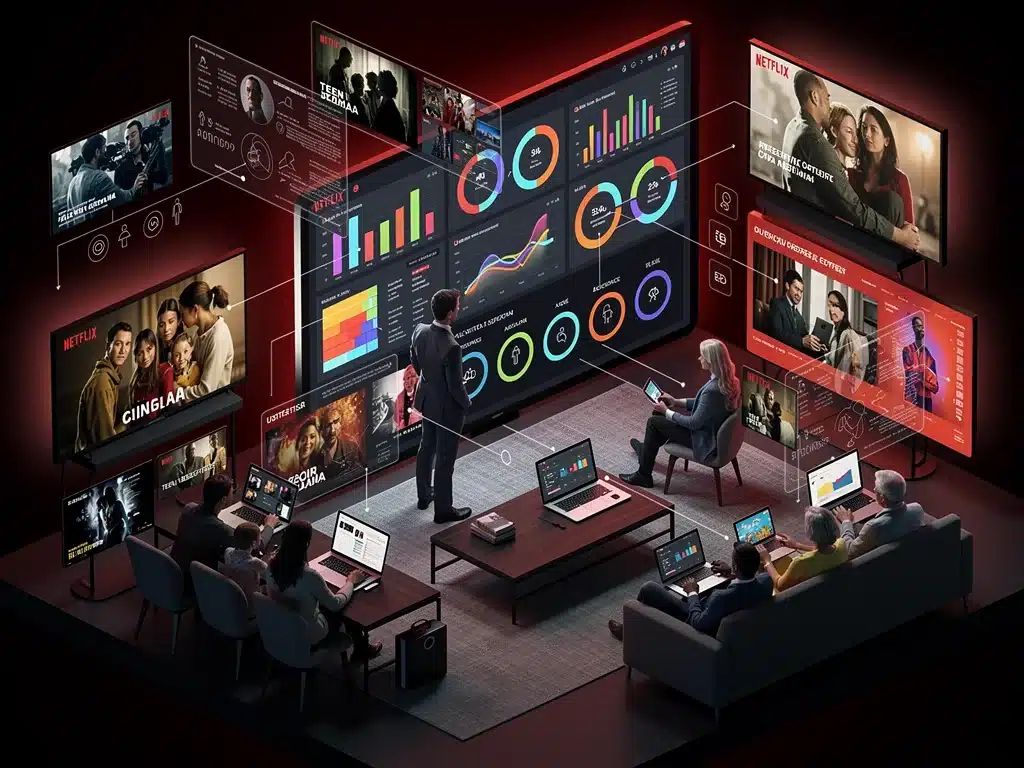
Breaking Down Cultural Barriers
Global co-productions serve multiple purposes. They allow Netflix to tap into local talent pools, leverage international tax incentives, and create content that is immediately relevant to specific regional markets. Crucially, many of these productions find immense crossover success in the U.S., influencing American creators to think more broadly about character development, plot complexity, and visual aesthetics. The influx of international drama has made U.S. storytelling richer and more varied.
- Diverse Narrative Structures: Introducing non-linear or multi-perspective storytelling.
- Cultural Exchange: Exposing U.S. audiences to different societal norms and issues.
- Talent Integration: Bringing international actors and directors to U.S. screens.
The impact extends beyond viewership; it influences the creative process itself. American writers and directors are now more open to exploring stories that might have once been considered too niche for a U.S. audience, or adopting stylistic elements previously associated with foreign cinema. This cross-pollination enriches the entire ecosystem of U.S. drama, pushing it towards greater innovation and sophistication.
This strategic focus on global content ensures Netflix’s continued dominance by offering a unique proposition in the streaming landscape. It not only diversifies its library but also cultivates a global community of viewers who are increasingly comfortable with and eager for stories from around the world. For U.S. drama, this means a future filled with more imaginative, culturally rich, and universally appealing narratives.
Strategic Move 3: Experiential Storytelling and Interactive Formats
Looking ahead to 2026, Netflix is making significant strides in strategic move number three: pioneering experiential storytelling and embracing interactive formats within its drama offerings. This move aims to deepen viewer engagement beyond passive consumption, transforming the audience into active participants in the narrative journey. While still in its nascent stages for complex dramas, the advancements in technology are paving the way for more immersive and personalized viewing experiences.
Interactive dramas, such as ‘Black Mirror: Bandersnatch,’ were early experiments that demonstrated the potential for viewer choice to alter storylines. For 2026, Netflix is exploring more sophisticated applications, potentially integrating elements of augmented reality (AR) or virtual reality (VR) to create truly experiential narratives. Imagine a drama where viewers can explore a crime scene virtually or interact with characters in a supplementary digital environment.
Beyond Choose-Your-Own-Adventure
The goal is not simply to offer branching narratives, but to create a sense of presence and agency that elevates emotional investment. This could involve companion apps that provide real-time information, character backstories, or even allow viewers to vote on plot developments. Such innovations blur the lines between traditional television and gaming, appealing to a new generation of digital natives who expect more from their entertainment.
- Augmented Reality Integration: Enhancing viewing with digital overlays.
- Viewer Agency: Allowing audiences to influence narrative outcomes.
- Multi-Platform Engagement: Extending story worlds beyond the screen.
This strategic shift presents both creative opportunities and technical challenges. Writers and producers must learn to craft stories with multiple pathways and outcomes, while technologists work to seamlessly integrate these interactive elements without disrupting the narrative flow. The payoff, however, could be immense: unparalleled viewer loyalty and a truly unique selling proposition in a competitive market.
By championing experiential storytelling, Netflix is not just delivering content; it’s delivering an experience. This innovative approach promises to redefine how audiences connect with drama, making it a more personal and memorable endeavor. It positions Netflix at the forefront of entertainment technology, ensuring it continues to shape the future of U.S. drama.
Strategic Move 4: Investment in Emerging Talent and Diverse Voices
Netflix’s fourth strategic move, crucial for shaping U.S. drama trends by 2026, is its steadfast commitment to investing in emerging talent and amplifying diverse voices. This strategy is multifaceted, extending from discovering new writers, directors, and actors to providing platforms for stories that have historically been underrepresented in mainstream media. The platform understands that innovation in storytelling often comes from fresh perspectives and unique cultural insights.
Through various initiatives, including mentorship programs, talent incubators, and direct development deals, Netflix actively seeks out creators from varied backgrounds. This commitment ensures a pipeline of original and authentic dramas that reflect the true diversity of the U.S. audience and beyond. It’s a deliberate effort to move away from homogenous narratives and embrace a wider spectrum of human experiences.
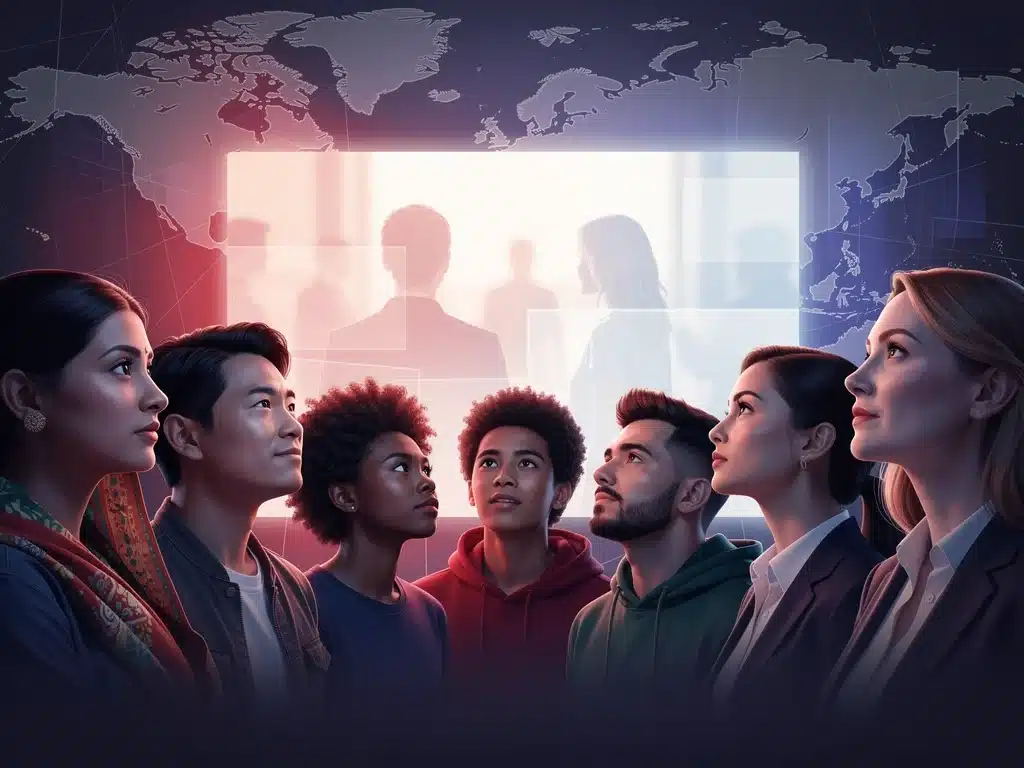
Cultivating the Next Generation of Storytellers
By empowering diverse creators, Netflix not only enriches its content library but also fosters a more inclusive industry. This approach leads to dramas that resonate with specific cultural groups, often achieving broad appeal due to their universal themes. The success of shows like ‘Never Have I Ever’ or ‘When They See Us’ highlights the power of authentic representation and the demand for these stories.
- Inclusive Development Programs: Supporting creators from marginalized communities.
- Authentic Representation: Prioritizing genuine portrayals of diverse experiences.
- Mentorship and Training: Nurturing new talent in writing, directing, and acting.
This strategic investment is not merely an act of social responsibility; it’s a shrewd business decision. Diverse stories attract diverse audiences, expanding Netflix’s subscriber base and enhancing its reputation as a leader in progressive entertainment. It also ensures that the platform remains relevant and dynamic, constantly evolving with societal shifts and audience expectations.
Ultimately, by backing emerging talent and diverse voices, Netflix is actively shaping the cultural conversation around U.S. drama. It’s creating a future where narratives are more reflective of the world we live in, fostering empathy and understanding through the power of storytelling. This move guarantees a vibrant and ever-evolving landscape for American drama, setting new benchmarks for inclusivity and creativity.
Strategic Move 5: Leveraging AI and Data for Production Efficiency and Quality
The fifth and perhaps most foundational strategic move for Netflix in shaping U.S. drama trends by 2026 is its advanced leveraging of AI and data for both production efficiency and quality enhancement. This goes beyond content recommendation, extending into every facet of the production pipeline, from script development to post-production and even marketing. Netflix is transforming itself into a data-driven studio, optimizing resources and maximizing creative output.
AI algorithms are being deployed to analyze scripts for potential audience appeal, identify optimal filming locations, and even assist in scheduling and budgeting. This predictive power allows Netflix to make more informed decisions, reducing wasted resources and increasing the likelihood of a drama’s success. For instance, AI can help pinpoint which narrative elements are most likely to resonate with specific demographics, guiding creative choices.
Optimizing the Creative Pipeline
Furthermore, data analytics play a crucial role in post-production, informing editing decisions, sound design, and visual effects to maximize impact. Netflix’s A/B testing of different trailers and thumbnails is a well-known example of how data drives marketing effectiveness, but this extends to optimizing the actual content itself. AI can even assist in identifying potential logistical bottlenecks before they arise, streamlining complex productions.
- Predictive Script Analysis: Assessing narrative elements for audience engagement.
- Resource Optimization: Efficient allocation of budget and personnel.
- Post-Production Enhancement: Data-informed decisions for editing and effects.
This strategic integration of AI and data allows Netflix to produce high-quality dramas at an impressive scale and pace, a competitive advantage in the content arms race. It enables quicker turnaround times for new series and films, keeping the content pipeline fresh and engaging for subscribers. This technological edge ensures that Netflix can continue to innovate while maintaining a high standard of production value.
By embracing AI and data not just as tools, but as integral components of its creative and operational strategy, Netflix is setting a new standard for the entertainment industry. This move ensures efficiency, quality, and a data-informed approach to storytelling that will continue to influence U.S. drama trends, making productions smarter, faster, and more aligned with audience desires for 2026 and beyond.
The Future Landscape: Consolidation and Innovation
As we approach 2026, the landscape of U.S. drama, significantly shaped by Netflix’s strategic moves, is poised for both consolidation and continued innovation. The streaming wars have intensified competition, leading to a period where platforms are not only vying for subscribers but also for creative talent and intellectual property. Netflix’s proactive strategies in personalization, global content, interactive storytelling, talent development, and AI integration position it strongly within this evolving environment.
The trend towards vertical integration, where media companies own both content production and distribution, will likely continue. This means that while Netflix focuses on its unique strengths, traditional studios with their own streaming services will increasingly prioritize their in-house content. This dynamic could lead to a more fragmented market, but also one rich with diverse offerings as each platform carves out its niche.
We can anticipate a greater emphasis on premium, event-driven dramas that capture widespread attention, alongside the continued cultivation of niche content. The success of a few tentpole series can drive subscriber growth, while a consistent flow of tailored content ensures long-term retention. This dual approach will be critical for all major players, including Netflix, as they navigate audience expectations and production costs.
Furthermore, technological advancements will continue to play a pivotal role. Beyond interactive narratives, we might see more sophisticated uses of virtual production, real-time rendering, and even generative AI in early stages of content creation. These tools could further democratize access to high-end production capabilities, allowing more diverse voices to tell their stories with cinematic quality.
In conclusion, the future of U.S. drama is one of relentless evolution, driven significantly by Netflix’s strategic foresight. Its commitment to innovation, global appeal, and data-driven decisions ensures that the platform will remain a formidable force, continuously pushing the boundaries of what television drama can be and influencing the entire industry for years to come.
| Key Strategic Move | Brief Description |
|---|---|
| Hyper-Personalization | Leveraging AI for ultra-specific content recommendations and niche curation. |
| Global Co-Productions | Investing in international content to diversify narratives and appeal globally. |
| Experiential Storytelling | Developing interactive formats and immersive viewing experiences. |
| AI for Production | Utilizing AI and data analytics to enhance production efficiency and quality. |
Frequently Asked Questions About Netflix’s Drama Influence
By 2026, Netflix’s hyper-personalization will move beyond basic recommendations, using advanced AI to predict individual viewer preferences with greater accuracy. This includes identifying niche interests and commissioning content tailored to specific emotional and thematic tastes, ensuring a more bespoke viewing experience for each subscriber.
Global co-productions expose U.S. audiences and creators to diverse storytelling techniques, cultural perspectives, and narrative structures. This broadens the American palate for drama, influencing U.S. productions to adopt more varied themes and styles, ultimately enriching the domestic drama landscape and fostering cross-cultural appreciation.
Netflix is exploring interactive formats beyond simple branching narratives, potentially integrating AR/VR elements or companion apps. The goal is to transform passive viewers into active participants, offering a sense of agency and deeper immersion in the narrative. This blurs the lines between television and gaming, enhancing emotional investment.
Investing in diverse talent ensures a pipeline of original, authentic dramas that reflect a wider spectrum of human experiences. This attracts diverse audiences, expands Netflix’s subscriber base, and enhances its reputation. It also fosters a more inclusive industry, leading to culturally rich and universally appealing narratives.
AI and data are used across the entire production pipeline, from script analysis and location scouting to budgeting and post-production. This optimizes resource allocation, minimizes risk, and guides creative decisions to maximize audience appeal. It allows Netflix to produce high-quality dramas efficiently and at scale.
Conclusion
Netflix’s strategic foresight and relentless innovation have fundamentally reshaped the U.S. drama landscape, and its influence is only set to deepen by 2026. Through hyper-personalization, global co-productions, experiential storytelling, investment in diverse talent, and advanced AI integration, the platform continues to set new benchmarks for content creation and audience engagement. These strategic moves not only solidify Netflix’s position as a market leader but also drive the entire industry towards a more diverse, interactive, and technologically advanced future. As viewers, we can anticipate a richer tapestry of stories, uniquely tailored experiences, and a continued evolution of what drama can truly be.
