2026 K-Drama Streaming Guide US: 5 Key Updates
Advertisements
This guide outlines the essential changes and updates to K-drama streaming platforms in the US for 2026, offering critical insights to help fans navigate content availability and optimize their viewing experience effectively.
For fans across the United States, keeping up with the dynamic world of K-dramas can be both exhilarating and, at times, a little bewildering. As we step into 2026, the landscape of how and where to watch these captivating stories continues to evolve at a rapid pace. This guide is your definitive resource for understanding The Ultimate 2026 Guide to Navigating K-Drama Streaming Platforms in the US: 5 Key Updates You Need to Know, ensuring you stay ahead of the curve and never miss a beat of your favorite Korean series.
Advertisements
The Shifting Sands of Content Licensing in 2026
The year 2026 marks a significant period for K-drama content licensing in the US. What was once a relatively stable ecosystem dominated by a few key players is now a complex web of short-term deals, exclusive windows, and fierce competition. Understanding these underlying shifts is crucial for any dedicated viewer, as it directly impacts where and when new K-dramas become available.
Major production houses in South Korea are increasingly leveraging their content for higher bids, leading to more fragmented distribution. This means that a show produced by Studio Dragon, for instance, might appear on Netflix for its initial run, only to move to a platform like Viki or a new, specialized service for its catalog life. This strategy maximizes revenue for producers but requires viewers to be more agile in their platform subscriptions.
The Rise of Producer-Owned Platforms
One of the most notable trends in 2026 is the acceleration of major Korean broadcasters and production companies launching or expanding their own direct-to-consumer streaming services in the US. This move allows them greater control over their intellectual property and a more direct connection with their audience.
- JTBC and TVING Expansion: JTBC, a powerhouse in K-drama production, continues to bolster its presence in the US, often through strategic partnerships. TVING, a major South Korean streaming service, is also making more aggressive moves to directly license and distribute its exclusive content, sometimes requiring separate subscriptions or bundles.
- Wavve’s Global Ambitions: Owned by the three major Korean public broadcasters (KBS, MBC, SBS), Wavve is actively exploring more direct global distribution channels. While still primarily focused on the Korean market, 2026 has seen increased efforts to make their extensive library of dramas and variety shows more accessible to US audiences, often through hybrid models or dedicated international apps.
- Exclusive Content Windows: These producer-owned platforms are increasingly reserving their most anticipated titles for exclusive windows, meaning viewers might need to subscribe to multiple services to catch all the latest hits immediately.
The impact of these shifts is profound. While it provides more ways to access content, it also introduces a layer of complexity for viewers who might find themselves juggling several subscriptions to keep up with their favorite genres and actors. Staying informed about these licensing deals and platform movements is key to an uninterrupted K-drama viewing experience.
Enhanced AI and Personalization Features Across Platforms
Streaming platforms in 2026 are no longer just content libraries; they are sophisticated ecosystems designed to understand and predict viewer preferences. The integration of advanced Artificial Intelligence (AI) and personalization features has reached new heights, transforming how K-drama fans discover and engage with content.
AI algorithms now analyze not only your viewing history but also your interactions within the platform, such as how long you pause on a title, which trailers you watch, and even your emotional responses to certain scenes (through anonymized data). This allows for hyper-personalized recommendations that go beyond simple genre matching.
Predictive Content Discovery
Platforms like Netflix and Viki are leading the charge in predictive content discovery. Their AI can now suggest K-dramas you might enjoy even before they are officially released, based on your past viewing habits and emerging trends among similar user profiles. This proactive approach helps build anticipation and ensures fans are aware of upcoming series relevant to their tastes.
- Genre Blending Analysis: AI can now identify subtle genre blends within K-dramas, recommending shows that combine romance with fantasy, or historical drama with mystery, even if those combinations aren’t explicitly tagged.
- Actor/Director Trajectory Tracking: If you’ve enjoyed several K-dramas featuring a particular actor or directed by a specific individual, the AI will prioritize new projects from those creators, often highlighting them prominently.
- Sentiment Analysis for Recommendations: Beyond basic ratings, AI can now gauge the emotional impact of a show on its audience, using this data to recommend K-dramas that evoke similar feelings or offer a desired emotional journey.
The goal is to make content discovery seamless and intuitive, minimizing the time spent searching and maximizing the time spent watching. This level of personalization creates a deeply engaging experience, making it easier than ever for fans to dive into new K-drama worlds tailored just for them.
The Rise of Interactive K-Drama Experiences
Beyond passive viewing, 2026 is ushering in an era of interactive K-drama experiences, blurring the lines between audience and narrative. These innovations aim to deepen viewer engagement and offer unique ways to connect with beloved stories and characters.
Platforms are experimenting with various interactive elements, from choose-your-own-adventure narratives to integrated social viewing features. The idea is to make K-drama consumption a more communal and personalized journey, moving beyond the traditional one-way broadcast model.
Choose-Your-Own-Path Narratives
While still in its nascent stages for K-dramas, some experimental titles are exploring interactive storytelling where viewers can make choices that influence the plot’s progression. This isn’t just about branching storylines; it’s about offering a more immersive experience where your decisions impact character arcs and outcomes.
- Limited Series Experiments: These interactive narratives are often found in shorter, experimental K-drama series, allowing creators to test the waters without committing to full-length productions.
- Impact on Character Development: Viewers might get to decide a character’s response in a critical moment, leading to different emotional resolutions or plot twists.
- Replayability Factor: The ability to re-watch and make different choices adds significant replay value, encouraging deeper engagement with the story world.
Integrated Social Viewing and Fan Engagement
Social viewing features are becoming standard, allowing friends to watch K-dramas simultaneously and interact in real-time within the platform. Furthermore, enhanced fan engagement tools are creating vibrant communities directly linked to the shows.
- Co-Watching Parties: Built-in features allow users to create virtual watch parties, complete with synchronized playback and integrated chat functions.
- Interactive Polls and Q&A: During or after episodes, platforms might host polls about plot predictions or character choices, and even live Q&A sessions with cast members or directors.
- Fan Art and Content Sharing: Dedicated sections within platforms allow fans to share their fan art, theories, and discussions, fostering a strong sense of community around specific K-dramas.
These interactive elements aren’t just gimmicks; they represent a fundamental shift in how K-dramas are consumed, transforming viewing into a more active and communal experience. This trend is set to grow, offering ever more innovative ways for fans to connect with their favorite shows.
The Expansion of Niche K-Drama Streaming Services
While major players continue to dominate, 2026 has seen a significant proliferation of niche K-drama streaming services designed to cater to specific tastes and preferences. These platforms often focus on particular genres, older classics, or independent productions, offering a curated experience that larger platforms might overlook.
This trend reflects a growing sophistication in the K-drama fandom, where viewers are looking for more than just the latest popular series. They seek depth, variety, and often, a connection to the roots of Korean television. These niche services fill that gap, providing a treasure trove for dedicated enthusiasts.
Specialized Genre Platforms
Several new services have emerged focusing exclusively on specific K-drama genres. For instance, platforms dedicated entirely to historical K-dramas (sageuk) or those specializing in indie and experimental Korean films and series are gaining traction. This allows fans to dive deep into their preferred sub-genres without sifting through unrelated content.
- Historical Drama Hubs: These platforms offer extensive libraries of historical K-dramas, often with enhanced contextual information, historical notes, and even cultural commentary to enrich the viewing experience.
- Indie K-Drama Showcases: Dedicated to showcasing up-and-coming directors and unconventional narratives, these services provide a platform for independent Korean productions that might not find a home on mainstream services.
- Web Drama Specialists: Given the popularity of shorter, web-based K-dramas, some platforms now specialize in this format, offering quick, digestible content perfect for busy schedules.
Archival and Classic K-Drama Libraries
Another significant development is the growth of services focusing on archiving and making classic K-dramas accessible. Many iconic series from the early 2000s or even older are now being digitally remastered and made available, often with improved subtitles and bonus content.
- Restoration Projects: These platforms often collaborate with Korean broadcasters to restore older K-dramas, preserving them for new generations of viewers and offering a nostalgic journey for long-time fans.
- Curated Collections: Experts curate collections based on themes, actors, or historical significance, providing context and guidance for exploring the rich history of Korean television.
- Educational Resources: Some niche platforms even integrate educational resources, offering insights into the cultural impact and production techniques of classic K-dramas.
The emergence of these niche services indicates a maturing market for K-drama content. While they might require additional subscriptions, they offer unparalleled depth and specificity, making them invaluable resources for true K-drama connoisseurs.
The Evolution of Subscription Models and Bundling
The days of a single, all-encompassing streaming subscription are largely behind us. In 2026, the K-drama streaming landscape in the US is characterized by a complex array of subscription models and bundling options, designed to cater to diverse consumer habits and budgets.
This evolution is driven by both consumer demand for flexibility and platforms’ desire to maximize revenue in a highly competitive market. Understanding these models is key to getting the most value for your money while enjoying your favorite K-dramas.
Tiered Subscription Plans
Most major streaming services now offer tiered subscription plans, providing options for various budgets and viewing preferences. These tiers often differ in terms of video quality, number of simultaneous streams, and the presence of advertisements.
- Basic (Ad-Supported) Tiers: These are generally the most affordable options, including advertisements before and sometimes during K-drama episodes. They often come with standard definition video quality.
- Standard (Ad-Free) Tiers: Offering an uninterrupted viewing experience with higher video quality (HD), these are the most popular choices for many K-drama fans.
- Premium (4K/UHD) Tiers: For those seeking the highest quality visuals, premium tiers provide 4K Ultra HD streaming, often with HDR support and the maximum number of simultaneous streams.
Strategic Bundling and Partnerships
To combat subscription fatigue and attract new users, streaming platforms are increasingly forming partnerships and offering bundled packages. These bundles can significantly reduce the overall cost for viewers who subscribe to multiple services.
- Cross-Platform Bundles: Services like Hulu and Disney+ (which often carry a selection of K-dramas) might bundle with other entertainment or news services, offering a consolidated bill and a slight discount.
- Telecom and ISP Partnerships: Many internet service providers (ISPs) and mobile carriers are offering promotional bundles that include subscriptions to popular K-drama streaming services as part of their service packages.
- University and Student Discounts: Educational institutions are partnering with streaming platforms to offer discounted rates to students, making K-dramas more accessible to a younger demographic.
Navigating these various models requires careful consideration of your viewing habits and budget. By strategically choosing tiered plans and taking advantage of bundling opportunities, K-drama fans can optimize their access to content without overspending.
The Impact of Global K-Drama Popularity on US Platforms
The phenomenal global popularity of K-dramas has had a profound and lasting impact on streaming platforms operating in the US. What was once considered niche content is now mainstream, influencing content acquisition strategies, production investments, and even technological developments.
This increased demand has elevated K-dramas from supplementary content to a core offering for many services, leading to greater investment and a more competitive environment for securing top titles. The US market, in particular, has seen a surge in dedicated K-drama viewership.
Increased Investment in Original K-Drama Production
Major US-based streaming giants, having witnessed the success of titles like Squid Game and Extraordinary Attorney Woo, are significantly increasing their investment in original K-drama production. This means more high-quality, exclusive K-dramas are being created specifically for a global audience, with US viewers often getting first access.
- Netflix’s Continued Dominance: Netflix remains a leader in funding original Korean content, with a dedicated budget for producing diverse K-dramas across various genres. Their global reach makes them an attractive partner for Korean production houses.
- Amazon Prime Video’s Expansion: Amazon Prime Video is also ramping up its K-drama offerings, both through licensing popular titles and investing in original productions, aiming to capture a larger share of the US K-drama market.
- Apple TV+’s Curated Selection: While perhaps not as broad as others, Apple TV+ is focusing on critically acclaimed, high-production-value K-dramas, often securing exclusive global rights for their carefully curated selection.
Enhanced Subtitling and Dubbing Quality
As K-dramas reach a wider, more diverse audience, the quality of localization – particularly subtitling and dubbing – has seen significant improvements. Platforms are investing in professional translators and voice actors to ensure an authentic and enjoyable viewing experience for non-Korean speakers.
- AI-Assisted Translation: While human oversight remains crucial, AI tools are assisting in accelerating and improving the accuracy of initial translations, allowing for quicker subtitle deployment.
- Multiple Language Options: Many K-dramas now offer multiple subtitle languages, and increasingly, high-quality English dubbing options, catering to different viewer preferences.
- Cultural Nuance Explanation: Some platforms are even incorporating features that explain cultural nuances or untranslatable idioms within their subtitles, enhancing viewer understanding and appreciation.
The global popularity of K-dramas has fundamentally reshaped the US streaming landscape. It has led to more content, better quality, and a more inclusive viewing experience, solidifying K-dramas as a major force in international entertainment.
Future Trends: Web3, Metaverse, and K-Drama Content
Looking beyond 2026, the convergence of K-drama content with emerging technologies like Web3 and the Metaverse promises to unlock entirely new dimensions of fan engagement and content monetization. While still in early stages, these trends are worth monitoring for their potential to revolutionize the K-drama experience in the US.
These technologies offer avenues for deeper immersion, ownership of digital assets, and novel forms of community interaction, moving beyond traditional streaming models into truly interactive and decentralized fan experiences.
K-Drama NFTs and Digital Collectibles
Non-Fungible Tokens (NFTs) related to K-dramas are beginning to emerge, offering fans the opportunity to own unique digital assets. These could range from limited edition character art and behind-the-scenes footage to virtual costumes and props from popular shows.
- Exclusive Content Access: Owning certain K-drama NFTs might grant exclusive access to fan events, Q&A sessions with cast, or early screenings of new episodes.
- Digital Memorabilia: NFTs serve as digital collectibles, allowing fans to own a piece of their favorite K-drama history in a verifiable and tradable format.
- Community Building: NFT ownership can create exclusive communities, fostering a deeper sense of belonging and shared interest among fans.
Metaverse Experiences and Virtual Fan Spaces
The concept of the Metaverse, a persistent, shared virtual space, holds immense potential for K-drama fans. Imagine attending virtual K-drama concerts, exploring digital recreations of iconic drama sets, or interacting with AI avatars of your favorite characters.
- Virtual Fan Meetups: Metaverse platforms could host virtual fan gatherings, allowing K-drama enthusiasts from around the world to connect and share their passion in a shared digital environment.
- Interactive Set Tours: Fans might be able to virtually explore the sets of their favorite K-dramas, discovering hidden details and interacting with elements within the virtual space.
- K-Drama Themed Games: The Metaverse could also host K-drama themed games and experiences, allowing fans to immerse themselves in narrative worlds and interact with characters in new ways.
While these concepts are still evolving, their integration with K-drama content offers a glimpse into a future where fan engagement is more immersive, interactive, and personalized than ever before. Keeping an eye on these developments will be crucial for understanding the next generation of K-drama consumption.
| Key Update | Brief Description |
|---|---|
| Content Licensing Shifts | Increased fragmentation and competition for K-drama rights, leading to diverse platform availability and exclusive windows. |
| Advanced AI Personalization | Hyper-personalized recommendations and predictive content discovery based on intricate viewing patterns. |
| Niche Streaming Services | Growth of specialized platforms for specific genres or classic K-dramas, offering curated content. |
| Evolving Subscription Models | Introduction of tiered plans and strategic bundling to provide flexibility and combat subscription fatigue. |
Frequently Asked Questions About K-Drama Streaming in 2026
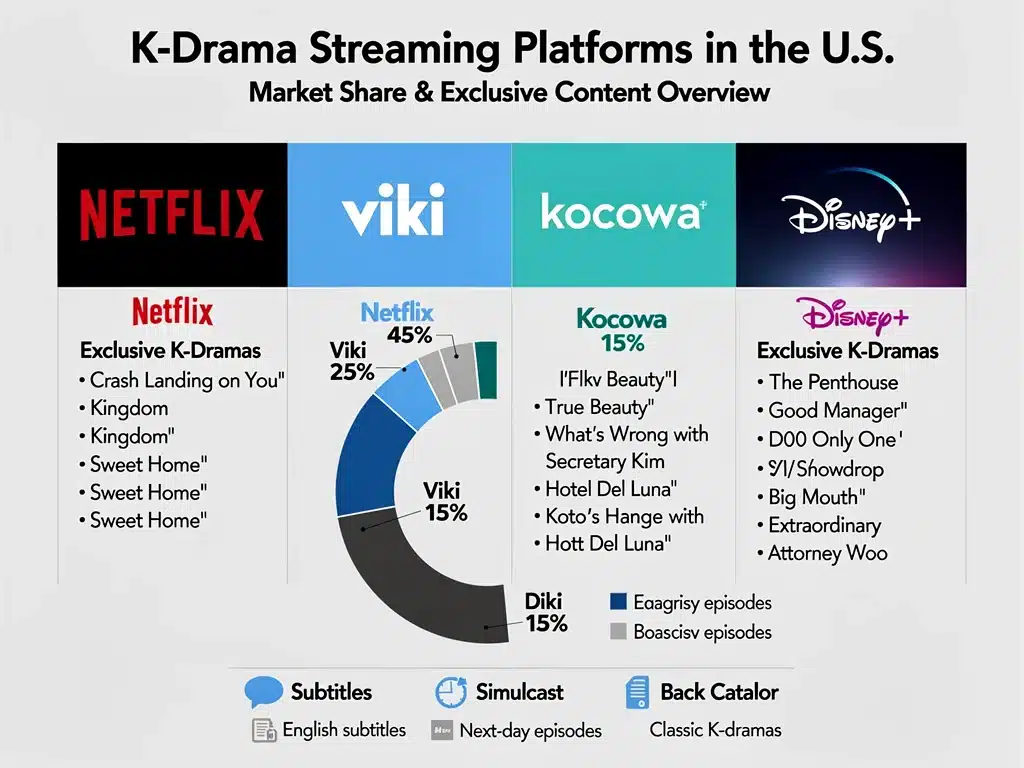
For 2026, Netflix, Viki, and Kocowa remain core platforms. Additionally, keep an eye on Disney+ for exclusive deals, and emerging niche services or direct offerings from Korean broadcasters like TVING and Wavve for a comprehensive K-drama library.
Content licensing is more fragmented. Production houses are striking shorter-term, exclusive deals with various platforms, meaning K-dramas might move between services. This requires viewers to monitor platform announcements closely for their favorite shows.
Yes, 2026 sees the rise of interactive experiences, including some experimental choose-your-own-path narratives and enhanced social viewing features. Platforms are integrating co-watching parties, live polls, and dedicated fan engagement sections to deepen viewer interaction.
Niche services offer highly curated content, often specializing in specific genres like historical dramas or indie productions. They also provide access to archival classics and offer enhanced contextual information, catering to dedicated fans seeking specific or older titles.
To manage subscriptions effectively, consider tiered plans based on your viewing habits and explore bundling options offered by platforms or telecom providers. Strategically rotate subscriptions based on new releases and use free trials to test new services.
Conclusion
The K-drama streaming landscape in the US for 2026 is an exciting, albeit complex, environment. From evolving content licensing and advanced AI personalization to the emergence of niche services and innovative interactive experiences, fans have more options than ever before. Navigating these changes effectively means staying informed about platform updates, understanding subscription models, and embracing new technologies that promise to deepen your engagement with beloved Korean stories. By utilizing this guide, you are well-equipped to make the most of your K-drama journey in 2026 and beyond, ensuring you continue to enjoy the rich, diverse world of Korean entertainment without missing a beat.
