K-Drama Trends: U.S. Streaming Dominance in Early 2026
Advertisements
The latest K-Drama trends highlight changing viewer preferences, broader genre variety, and growing investment from major streaming platforms. This update explains what is gaining attention, why it matters, and which developments audiences should monitor next.
Korean dramas continue to expand beyond romance, with thrillers, historical series, fantasy, action, and socially driven stories attracting wider audiences. Strong production quality, distinctive storytelling, and global distribution are helping these titles reach new viewers.
Streaming competition, international casting, shorter release windows, and cross-platform promotion are likely to shape the next phase of growth. Viewers should also watch how platforms balance original productions, licensing strategies, and demand for more diverse stories.
The Ascent of Niche Genres and Darker Narratives
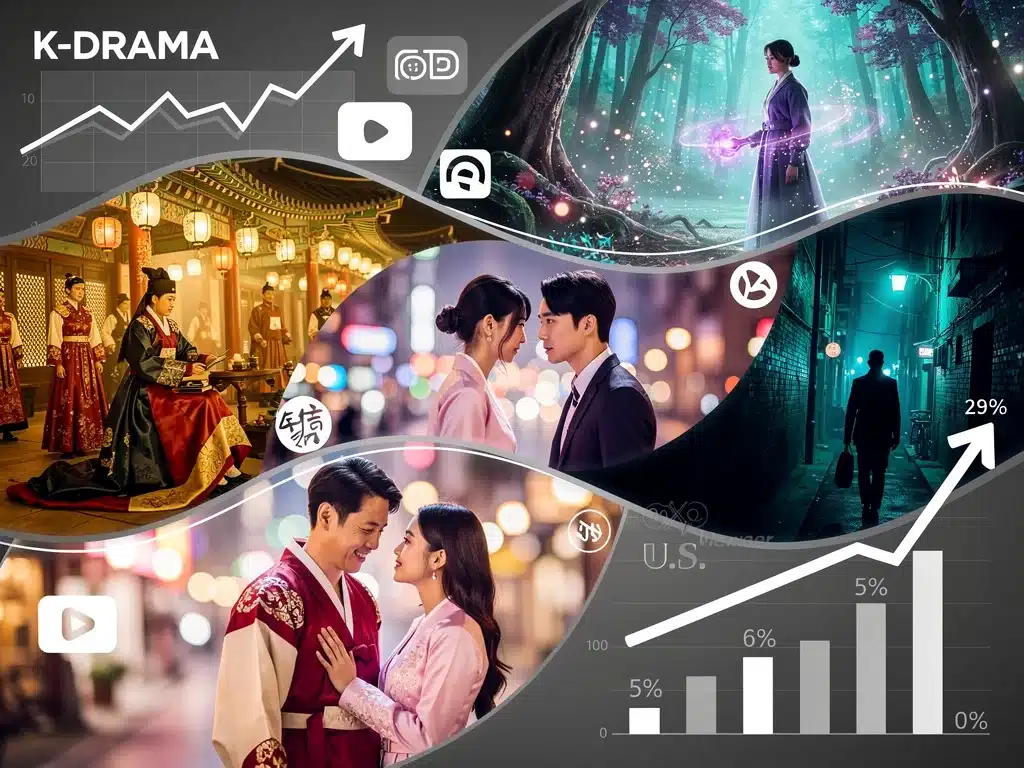
The traditional dominance of romantic comedies in K-dramas is steadily giving way to a broader spectrum of genres. Early 2026 viewer data indicates a significant surge in demand for thrillers, psychological dramas, and even sci-fi series among U.S. audiences.
Advertisements
This shift reflects a maturing audience base, increasingly familiar with K-drama storytelling conventions and eager for more complex narratives. Streaming platforms are responding by acquiring and producing content that pushes these genre boundaries.
The appetite for darker, more intricate plots suggests a departure from lighter fare, indicating a deeper engagement with Korean cinematic and television artistry. This trend highlights a growing appreciation for sophisticated storytelling.
Psychological Thrillers Captivate Viewers
Psychological thrillers, often characterized by their intricate plots and moral ambiguities, have seen a remarkable spike in U.S. viewership. Series exploring complex human conditions and suspenseful mysteries are consistently ranking high.
These dramas frequently offer a nuanced commentary on societal issues, resonating deeply with an audience seeking more than just escapism.
The global success of titles like ‘Squid Game’ paved the way for this trend, setting a new benchmark for what K-dramas can achieve.
Fantasy and Sci-Fi Expand Horizons
- Increased production values in fantasy and sci-fi K-dramas attract new viewers.
- Innovative visual effects and unique world-building rival Hollywood productions.
- Series exploring dystopian futures or magical realms gain critical acclaim and strong viewership.
The expansion into these high-concept genres demonstrates the industry’s willingness to invest in diverse storytelling. This broadens the appeal of K-dramas beyond its traditional fan base, drawing in viewers who might typically gravitate towards Western productions.
Platform Wars and Exclusive Content Strategies
The competition among streaming giants to secure exclusive K-drama content has intensified significantly by early 2026. Major players are investing heavily in licensing deals and original productions to attract and retain subscribers.
This aggressive content acquisition strategy directly impacts what U.S. viewers have access to, often making certain highly anticipated K-dramas exclusive to one platform. The battle for subscriber loyalty is fought increasingly on the grounds of unique Korean content.
Data indicates that subscribers are willing to subscribe to multiple services if it means access to a wider array of K-dramas. This makes exclusive content a critical differentiator in a crowded streaming market.
Netflix’s Continued Dominance and New Challengers
Netflix remains a leading platform for K-dramas, supported by its early investment, global distribution network, and consistent release of original productions. Its broad catalog continues to attract U.S. viewers across multiple genres.
At the same time, competing services are expanding their Korean content offerings to reach specific audience segments. Some platforms may focus on romance, thrillers, prestige dramas, or exclusive licensed titles to differentiate their libraries.
This growing competition can provide viewers with more choices while encouraging greater investment in Korean productions. Future market share will depend on content quality, exclusivity, pricing, accessibility, and each platform’s ability to build loyal audiences.
The Rise of Hybrid Distribution Models
- Simultaneous release strategies in Korea and the U.S. become more common.
- Partnerships between Korean production houses and U.S. distributors streamline access.
- Free, ad-supported streaming television (FAST) services begin to license older K-drama catalogs.
These evolving distribution models indicate a dynamic shift in how K-dramas reach American viewers. The goal is to maximize accessibility while maintaining profitability, catering to diverse consumption habits.
The Impact of Social Media and Fan Communities
Social media platforms continue to play an indispensable role in amplifying K-Drama Trends 2026 and driving viewership in the U.S. Fan communities on platforms like Twitter, TikTok, and Reddit act as powerful engines for discovery and engagement.
The immediate sharing of reactions, theories, and fan edits creates a vibrant ecosystem around K-dramas, turning casual viewers into dedicated fans. This organic promotion is a key factor in the rapid spread of new trends and popular titles.
Influencer marketing and fan-driven content creation contribute significantly to the virality of K-dramas, often propelling lesser-known series into mainstream consciousness. The interactive nature of these platforms fosters a strong sense of community.
TikTok’s Influence on K-Drama Discovery
TikTok has become an important discovery channel for K-dramas, especially among younger audiences. Short clips, fan edits, reactions, and memorable scenes can introduce viewers to new series within seconds.
Its recommendation system helps connect users with content that matches their viewing interests, allowing K-drama-related videos to spread quickly. This can increase awareness and encourage audiences to search for the full series on streaming platforms.
The platform’s visual and fast-paced format is particularly effective in a crowded entertainment market. However, long-term success still depends on the quality of the series, audience retention, and continued promotion beyond viral moments.
Dedicated Fan Forums and Online Discussions
- Reddit communities and dedicated K-drama forums provide spaces for in-depth analysis and discussion.
- These platforms foster a strong sense of belonging among fans, enhancing engagement.
- Online discussions often influence perceived popularity and critical reception of new releases.
The collective power of these online communities cannot be understated. They not only consume content but actively shape its perception and popularity, making them crucial stakeholders in the K-drama ecosystem.
Diversification of Storylines: Beyond Romance
While romance remains a staple, the prevailing K-Drama Trends 2026 indicate a significant expansion into diverse thematic territories. Stories focusing on social justice, mental health, and complex family dynamics are gaining considerable traction.
This diversification reflects a growing maturity in K-drama production, willing to tackle challenging subjects with sensitivity and depth. U.S. audiences are increasingly drawn to these narratives that offer both entertainment and thought-provoking insights.
The move away from solely romance-centric plots suggests a broader appeal and a commitment to storytelling that mirrors real-world complexities. This enriches the overall K-drama viewing experience.
Social Commentary and Real-World Issues
K-dramas increasingly incorporate social commentary by exploring issues such as economic inequality, workplace harassment, social pressure, and political corruption. These themes can make fictional stories feel more relevant to contemporary audiences.
By connecting personal struggles with broader social problems, these productions create narratives that are both emotional and thought-provoking. Viewers can engage with individual characters while also reflecting on the systems affecting their lives.
This combination of entertainment and social critique contributes to the growing international appeal of K-dramas. Their perspective can offer audiences a different approach to subjects that may receive less attention in mainstream Western productions.
Exploring Mental Health and Personal Growth
- Series focusing on characters’ journeys through mental health challenges resonate with empathy.
- Narratives exploring personal growth, healing, and self-discovery gain significant viewership.
- These themes contribute to a deeper, more meaningful connection between viewers and characters.
The sensitive portrayal of mental health issues and personal struggles adds a layer of authenticity and relatability to K-dramas. This humanistic approach fosters a strong emotional bond with the audience.
The Rise of Webtoon and Web Novel Adaptations
A significant trend observed in early 2026 is the increasing reliance on webtoons and web novels as source material for K-dramas. This adaptation strategy offers a rich pool of pre-validated stories with existing fanbases.
These adaptations often come with built-in audiences, reducing the risk for production companies and streaming platforms. The visual storytelling capabilities of webtoons translate well to the screen, providing unique aesthetic opportunities.
The success of numerous webtoon-based K-dramas has solidified this as a reliable and popular production model. It ensures a continuous supply of fresh, engaging narratives for the global market.
Built-in Audiences and Pre-validated Stories
Webtoons and web novels often attract large audiences before being adapted into K-dramas. This established fan base can generate immediate interest and encourage viewers to follow familiar characters and stories on screen.
Popular source material also gives producers clearer insight into audience preferences, successful themes, and the most engaging parts of a story. This can reduce some of the uncertainty involved in developing an entirely original production.
For streaming platforms, adaptations may offer stronger promotional potential and a more predictable starting audience. However, their success still depends on casting, production quality, pacing, and how faithfully the original work is translated to television.
Visual Aesthetics and Creative Freedom
- Webtoon adaptations often bring distinctive visual styles and character designs to television.
- The episodic nature of webtoons lends itself well to K-drama’s typical season structure.
- Creators often collaborate with original webtoon artists to maintain artistic integrity.
This trend not only provides compelling storylines but also introduces a fresh visual aesthetic to K-dramas. The creative freedom offered by adapting these diverse sources allows for a wide range of genres and artistic expressions.
Viewer Data: Demographics and Consumption Habits
Analysis of early 2026 viewer data reveals key demographic shifts and evolving consumption habits among U.S. K-Drama trends enthusiasts. The audience is becoming increasingly diverse, extending beyond traditional Asian-American demographics.
Younger viewers, particularly Gen Z and Millennials, continue to be primary drivers of K-drama consumption. However, there’s a noticeable increase in engagement from older demographics, broadening the overall appeal.
Consumption patterns indicate a preference for binge-watching, especially for completed series, alongside active engagement with ongoing shows through weekly releases. This dual approach caters to different viewer preferences.
Geographic Spread Across the U.S.
K-Drama trends viewership in the United States appears to be expanding beyond the coastal cities where international content traditionally gained its strongest audiences. This broader geographic reach suggests that Korean series are becoming part of mainstream entertainment.
Greater availability across multiple streaming platforms has made K-dramas easier to discover in urban, suburban, and rural markets. Dubbing, subtitles, recommendations, and social media promotion have also helped attract more diverse viewers.
As access continues to improve, platforms may invest in wider marketing campaigns and content tailored to different audience segments. This national growth could strengthen the long-term position of K-dramas in the U.S. streaming market.
Peak Viewing Times and Device Preferences
- Evening and weekend hours remain peak times for K-drama consumption.
- Mobile devices and smart TVs are the most popular viewing platforms.
- A significant portion of viewers engage with K-dramas during commutes or short breaks.
Understanding these habits helps streaming platforms optimize their content delivery and marketing strategies. The flexibility of K-drama length and format caters well to modern, on-the-go consumption.
Future Outlook: Sustainability and Innovation
Looking ahead, the sustainability of K-Drama Trends 2026 in the U.S. market hinges on continued innovation and strategic adaptation. The industry must evolve to maintain its competitive edge and audience engagement.
Investment in diverse talent, both on-screen and behind the scenes, will be crucial for fresh perspectives and compelling storytelling. Avoiding formulaic approaches will ensure long-term appeal and prevent audience fatigue.
Collaboration between Korean production houses and U.S. creative teams could lead to hybrid content that further bridges cultural gaps. This cross-cultural exchange holds immense potential for future growth.
Technological Advancements in Production
Advances in virtual production, AI-assisted creative tools, and interactive viewing may reshape how K-Drama trends are produced and experienced. These technologies can support more immersive settings and flexible storytelling.
Virtual sets and smarter production workflows may help creators expand visual quality while controlling time and costs. Personalised recommendations and interactive features could also change how audiences engage with each series.
Used responsibly, these innovations may broaden the creative possibilities of K-dramas without replacing human direction and storytelling. Adapting to new technology will be important for maintaining quality and global competitiveness.
The Role of Fan Engagement and Feedback
- Listening to fan feedback and engaging with communities will guide future content development.
- Interactive elements, such as polls or alternate endings, could increase viewer participation.
- Fan-driven initiatives will continue to shape the cultural impact and popularity of K-dramas.
Maintaining a strong connection with the audience ensures that K-Drama trends remain relevant and resonant. The active involvement of fans is a powerful asset for sustained growth and popularity.
| Key Trend | Brief Description |
|---|---|
| Niche Genre Expansion | Thrillers, sci-fi, and psychological dramas gain significant U.S. viewership. |
| Exclusive Content Wars | Streaming platforms heavily invest in K-drama originals and licensing. |
| Social Media Amplification | Fan communities and TikTok drive discovery and engagement. |
| Webtoon Adaptations | Pre-validated stories from webtoons and web novels dominate production. |
Frequently Asked Questions About K-Drama Trends
The most surprising trend is the significant shift from romance-centric narratives to darker, more complex genres like psychological thrillers and sci-fi. This indicates a maturing U.S. audience eager for diverse and thought-provoking storytelling beyond traditional K-drama tropes.
Streaming platforms are actively investing in exclusive K-drama originals and licensing deals across various genres to attract and retain subscribers. They are also exploring hybrid distribution models, including simultaneous releases and partnerships, to maximize content accessibility for U.S. viewers.
Social media, especially TikTok, Twitter, and Reddit, is crucial for K-drama discovery and engagement. Fan communities and influencer content generate significant buzz, driving viewership and amplifying the reach of new and established series among diverse U.S. audiences.
Yes, significantly. While romance remains, K-dramas are increasingly exploring themes of social justice, mental health, and complex family dynamics. This diversification reflects a growing willingness to tackle challenging subjects, resonating with U.S. viewers seeking deeper, more impactful narratives.
Webtoon and web novel adaptations are a major trend, providing a rich source of pre-validated stories with existing fanbases. This strategy reduces production risk and offers unique visual aesthetics, ensuring a continuous supply of fresh, engaging content for the U.S. streaming market.
Looking Ahead
The latest K-Drama trends reflect a rapidly evolving entertainment market shaped by genre diversity, strategic streaming investment, and highly engaged fan communities. These factors continue to strengthen the global reach of Korean productions.
Broader storytelling, international promotion, and stronger platform partnerships are helping K-dramas attract new audiences. Fan-driven discussions, recommendations, and social media activity also play an important role in sustaining interest.
Future growth may include more cross-cultural collaborations, multilingual productions, and technology-driven viewing experiences. These developments could keep K-dramas influential as global streaming competition becomes increasingly intense.
