2026 K-Drama Export Surge: US Market Penetration & Viewer Demographics
Advertisements
The 2026 K-drama export surge into the US market is fueled by diverse content, strategic streaming partnerships, and a growing, evolving audience, signifying a profound cultural and economic impact beyond traditional entertainment boundaries.
The global entertainment landscape is constantly shifting, and few phenomena have captured international attention quite like the Korean Wave, or Hallyu. In 2026, we anticipate a significant acceleration in the 2026 K-Drama Export Surge, particularly within the United States market. This isn’t just a fleeting trend; it’s a deeply rooted cultural movement with profound implications for content creators, distributors, and, most importantly, viewers.
Understanding the K-Drama Phenomenon in the US
The journey of K-dramas from niche content to mainstream obsession in the United States has been remarkable. What began as a cult following among specific ethnic communities has blossomed into a widespread cultural phenomenon. This section explores the foundational elements contributing to this sustained growth and increasing visibility.
Initially, K-dramas found their audience through early streaming platforms and fan-subtitled communities. These dedicated groups were instrumental in building a grassroots movement, sharing recommendations and fostering a sense of community around this unique form of storytelling. As technology evolved, so did accessibility, paving the way for broader appeal.
The Role of Streaming Platforms in Market Expansion
The proliferation of global streaming services has been a game-changer for K-drama penetration. Platforms like Netflix, Hulu, and later, dedicated services such as Viki and Kocowa, recognized the burgeoning interest and began investing heavily in licensing and co-producing Korean content. This strategic move provided K-dramas with unprecedented reach and exposure to a diverse American audience.
- Netflix’s Global Strategy: Netflix’s significant investment in Korean originals and licensed content has been pivotal, often featuring K-dramas prominently on its platform alongside Western productions.
- Specialized Platforms: Viki and Kocowa continue to serve as essential hubs for K-drama enthusiasts, offering extensive libraries, rapid subtitling, and community features that enhance the viewing experience.
- Broader Distribution: Mainstream platforms have made K-dramas as accessible as any other popular series, integrating them into daily viewing habits for millions.
The ease of access, coupled with high production quality and compelling narratives, has effectively dismantled geographical barriers. American viewers can now discover and binge-watch K-dramas with the same convenience as their domestic shows, contributing significantly to the anticipated 2026 K-drama export surge.
In essence, the rise of streaming platforms transformed K-dramas from an obscure foreign genre into a readily available and highly engaging entertainment option, laying critical groundwork for future market expansion.
Key Drivers of the 2026 K-Drama Export Surge
Several interconnected factors are converging to propel the 2026 K-drama export surge into the US market. These drivers extend beyond mere accessibility and delve into the fundamental appeal and strategic positioning of Korean content. Understanding these elements is crucial for anticipating future trends.
The Korean entertainment industry has meticulously cultivated a reputation for innovation and quality. From intricate plotlines to stunning cinematography, K-dramas consistently deliver high production values that rival, and often surpass, Western counterparts. This commitment to excellence ensures sustained viewer engagement and critical acclaim.
Content Diversity and Narrative Depth
One of the most compelling aspects of K-dramas is their unparalleled diversity in genre and narrative depth. Unlike some regional productions that might stick to a few popular formulas, K-dramas fearlessly explore a vast spectrum of human experience.
- Genre Blending: K-dramas often masterfully blend genres, seamlessly transitioning between romance, thriller, fantasy, and social commentary within a single series. This keeps audiences engaged and offers something for every taste.
- Universal Themes: While culturally specific, many K-dramas tackle universal themes such as love, family, ambition, social justice, and personal growth, making them relatable to a global audience.
- High Production Quality: Significant investment in screenwriting, directing, and visual effects ensures a polished and immersive viewing experience.
This rich tapestry of storytelling ensures that there’s always something new and exciting for viewers to discover, preventing audience fatigue and continually attracting new fans. The ability to innovate and adapt narratives to contemporary tastes is a hallmark of the Korean creative industry.
Ultimately, the combination of compelling, diverse stories told with exceptional production quality forms the bedrock of the K-drama appeal, fueling its exponential growth in international markets.
Evolving US Viewer Demographics: Who is Watching K-Dramas?
The demographic profile of K-drama viewers in the US has undergone a significant transformation. What was once perceived as content primarily consumed by Asian diaspora communities has now expanded to include a remarkably diverse audience. This shift is critical to understanding the depth of market penetration.
Early K-drama enthusiasts were often second-generation immigrants seeking a connection to their heritage or language learners. However, the current landscape reveals a much broader appeal, crossing ethnic, age, and socioeconomic lines. This expansion is a testament to the universal themes and high quality of the content.
Beyond the Niche: A Broad Appeal
Research indicates a growing interest among non-Asian demographics, with significant viewership increases among Caucasian, Hispanic, and African American audiences. This diversification is not accidental; it’s a direct result of increased accessibility and word-of-mouth recommendations.
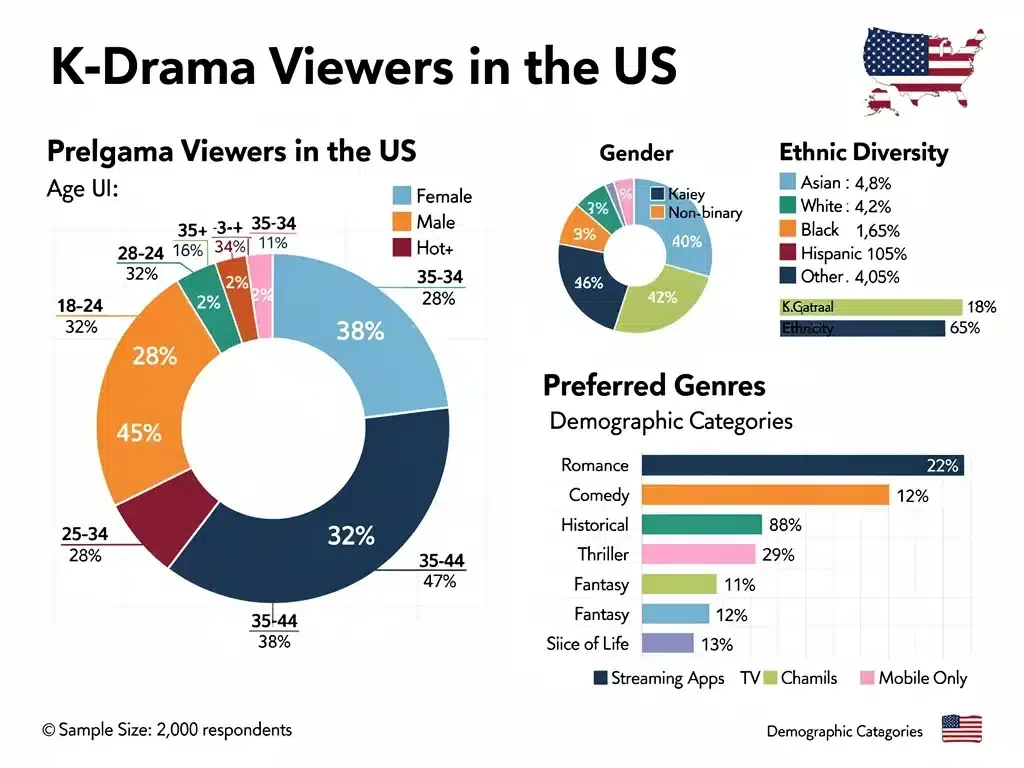
Furthermore, the age range of K-drama viewers is expanding. While younger audiences (18-34) remain a core demographic, there’s a noticeable uptick in viewership among older age groups. This suggests that the appeal of K-dramas transcends generational divides, offering complex narratives that resonate with varied life experiences.
- Youth Engagement: Gen Z and Millennials are highly engaged, often through social media, driving trends and discussions around new releases.
- Increasing Diversity: Viewership is becoming more ethnically and racially diverse, reflecting the broader American population.
- Gender Balance: While often perceived as female-dominated, male viewership is steadily growing, particularly for action, thriller, and historical genres.
The evolving demographics highlight K-dramas’ ability to connect with a wide array of individuals, demonstrating their universal storytelling power. This broad appeal is a key indicator of sustained growth and solidifies the market for future K-drama exports.
This demographic shift underscores the successful mainstreaming of K-dramas, moving them from a niche interest to a significant part of the American entertainment diet, a crucial factor in the 2026 K-drama export surge.
Strategic Market Penetration Tactics for 2026
The continued success of K-dramas in the US market isn’t solely organic; it’s also the result of shrewd strategic planning and execution by Korean production houses and international distributors. These tactics are designed to deepen market penetration and solidify K-dramas’ position in the competitive American entertainment landscape.
From strategic partnerships to localized marketing efforts, the industry is actively working to bridge cultural gaps and make K-dramas more approachable for new audiences. This proactive approach ensures that the momentum gained is not just maintained but accelerated.
Collaborations, Localization, and Cross-Cultural Appeal
One primary strategy involves increased collaboration between Korean and American production companies. These partnerships can lead to hybrid content that blends cultural elements, making K-dramas more familiar to Western viewers while retaining their unique Korean flavor.
Furthermore, localization efforts go beyond mere subtitling. They include culturally sensitive dubbing, marketing campaigns tailored to American tastes, and even adapting certain narrative elements for broader understanding without losing the original essence. This nuanced approach helps to break down perceived barriers for new viewers.
- Co-Production Ventures: Joint ventures with US studios or distributors can provide access to larger budgets, wider distribution networks, and a deeper understanding of local audience preferences.
- Targeted Marketing: Utilizing social media, influencer collaborations, and mainstream advertising to reach specific demographic segments within the US.
- Fan Engagement: Organizing fan events, virtual meet-and-greets, and interactive content to foster a stronger connection between viewers and shows.
These strategic moves aim to not only attract new viewers but also to convert casual watchers into dedicated fans. By actively engaging with the American audience and adapting to its nuances, the K-drama industry is setting the stage for an even more dominant presence in 2026.
The deliberate and multi-faceted approach to market penetration is a testament to the industry’s long-term vision, ensuring that the 2026 K-drama export surge is built on a foundation of strategic growth and cultural exchange.
The Impact of Social Media and Fan Culture
In the digital age, social media platforms and the vibrant fan communities they foster play an indispensable role in the global spread of K-dramas. For the 2026 K-drama export surge, these online ecosystems are not just supplementary; they are central to discovery, discussion, and sustained engagement within the US market.
Platforms like Twitter, TikTok, Instagram, and Reddit have become virtual water coolers where fans share theories, create memes, discuss plot twists, and celebrate their favorite actors. This organic, user-generated content acts as a powerful marketing tool, reaching potential new viewers in authentic and compelling ways.
Building Global Communities and Driving Virality
The interactive nature of social media allows fans to connect across geographical boundaries, forming global communities centered around specific K-dramas or actors. These communities are incredibly active, generating buzz and keeping shows relevant long after their initial airing.
TikTok, in particular, has proven instrumental in introducing K-dramas to younger, digitally native audiences. Short, engaging clips, sound bites, and fan edits frequently go viral, sparking curiosity and driving new viewers to platforms where they can watch full series. This rapid dissemination of content snippets creates entry points for those unfamiliar with the genre.
- Hashtag Trends: K-drama related hashtags frequently trend globally, indicating high levels of engagement and widespread discussion.
- Influencer Marketing: K-pop idols and K-drama actors often have massive social media followings, and their endorsements or appearances in dramas directly translate to increased viewership.
- Fan-Created Content: Fan art, fan fiction, reaction videos, and analysis pieces contribute to a rich ecosystem that keeps the content alive and continuously attracts new enthusiasts.
This dynamic interplay between content and community creates a self-sustaining cycle of discovery and engagement. Social media acts as a powerful amplifier, ensuring that the 2026 K-drama export surge isn’t just about distribution but also about cultivating a passionate, global fanbase.
The power of social media and fan culture cannot be overstated in its contribution to the K-drama phenomenon, turning viewers into advocates and driving the genre’s continued expansion in the US.
Future Outlook: Sustaining K-Drama Growth Beyond 2026
While the 2026 K-drama export surge is highly anticipated, the industry’s focus is already shifting towards long-term sustainability and continued growth. Maintaining momentum requires innovation, adaptation, and a deep understanding of evolving audience preferences. This forward-looking perspective is crucial for securing K-dramas’ lasting legacy in the US entertainment market.
The challenge lies in avoiding saturation and continually offering fresh, high-quality content that resonates with a diverse and increasingly sophisticated audience. The industry must balance cultural authenticity with global appeal, ensuring that K-dramas remain distinctive while being accessible.
Innovation in Storytelling and Production Models
To sustain growth, K-drama creators are likely to explore new storytelling formats and production models. This could include shorter series, anthology formats, interactive content, or even blending K-drama elements with other global entertainment styles. Experimentation will be key to keeping content fresh and engaging.
Investment in emerging technologies, such as virtual reality (VR) or augmented reality (AR) experiences related to K-dramas, could also provide new avenues for fan engagement and revenue generation. Furthermore, greater emphasis on diverse representation within K-drama narratives could further broaden their appeal.
- Diversifying Genres: Continued exploration of less common genres like sci-fi, political thrillers, or niche historical dramas to attract new segments of the audience.
- Talent Development: Nurturing new writers, directors, and actors to ensure a continuous pipeline of fresh talent and creative perspectives.
- Global Partnerships: Expanding co-production and distribution deals beyond the US to other emerging markets, creating a broader international network.
The industry’s ability to adapt, innovate, and remain connected to its audience will be paramount. By consistently delivering compelling narratives and exploring new frontiers in entertainment, K-dramas can secure their place as a permanent fixture in the global cultural landscape, extending their influence far beyond the 2026 export surge.
Ultimately, the future of K-dramas in the US market hinges on a commitment to creative excellence and strategic foresight, ensuring that their unique storytelling continues to captivate audiences for years to come.
| Key Point | Brief Description |
|---|---|
| Streaming Platform Impact | Global platforms like Netflix and Viki are crucial for K-drama accessibility and widespread US market penetration. |
| Content Diversity | Rich variety of genres and universal themes attract a broad and diverse US audience. |
| Evolving Demographics | US viewership is expanding beyond Asian diaspora to include diverse age groups and ethnicities. |
| Social Media Influence | Fan culture and platforms like TikTok drive discovery, discussion, and viral marketing. |
Frequently asked questions about K-drama in the US
What factors are driving the 2026 K-drama export surge to the US?▼The surge is driven by increased accessibility through streaming platforms, exceptional content diversity, high production quality, and strategic marketing efforts. Universal themes and compelling narratives also play a significant role in attracting a broader American audience.
How have US K-drama viewer demographics changed?▼Initially appealing to Asian diaspora, US K-drama viewership has expanded significantly to include diverse ethnic groups and age ranges. Younger audiences remain core, but older demographics and male viewers are increasingly engaging with varied genres.
What role do streaming platforms play in K-drama’s US market penetration?▼Streaming platforms like Netflix, Viki, and Hulu are crucial. They provide unparalleled accessibility, invest in licensing and co-productions, and integrate K-dramas into mainstream viewing, effectively breaking down geographical and linguistic barriers for US audiences.
How does social media contribute to K-drama’s popularity?▼Social media platforms like TikTok, Twitter, and Instagram create vibrant fan communities. They drive viral trends, facilitate discussions, and act as powerful organic marketing tools, introducing K-dramas to new viewers and sustaining engagement.
What strategies are being used to sustain K-drama growth beyond 2026?▼Future growth strategies include innovative storytelling, diversified production models, and increased global collaborations. The industry focuses on maintaining high quality, exploring new genres, and adapting to evolving audience preferences to ensure long-term appeal and market presence.
Conclusion
The anticipated 2026 K-drama export surge into the US market represents a pivotal moment in global entertainment. This profound expansion is not merely a transient trend but a reflection of strategic industry efforts, the universal appeal of compelling storytelling, and the evolving tastes of American audiences. From the foundational role of streaming platforms in democratizing access to the intricate dance of social media and fan culture, every element converges to create a powerful cultural phenomenon. As K-dramas continue to innovate and adapt, their influence is set to deepen, solidifying their status as a major force in the US entertainment landscape and fostering a rich, ongoing cultural exchange.